

| Key Points | Details to Remember |
|---|---|
| 🐾 Definition | Breed created in the Soviet Union for guarding and police/military work. |
| 🛡️ Role | Natural guardian, protective with a strong pack instinct. |
| 💪 Morphology | Robust and large: heavy bone structure, dense and waterproof coat. |
| 🎯 Education | Firm and balanced coaching, early socialization essential. |
| 🩺 Health | Regular monitoring: dysplasia, joint problems, coat maintenance. |

The Black Russian Terrier, often perceived as a silent giant, has the presence of a guard dog and the sensitivity of a faithful companion. Born from a pragmatic logic — to create a robust, versatile, and reliable dog for the Soviet army and police — it remains rare today but appreciated by those who want an uncompromising protector. More than power is sought here: the breed requires time, consistent training, and an adapted living environment. If you are considering welcoming a titan into your home, here is a detailed, pragmatic, and nuanced guide to understand what it entails on a daily basis.
Origins and History: a Reasoned Creation
The genesis of the Black Russian Terrier dates back to the 1940s-1950s. Soviet breeders crossed several breeds — notably the Rottweiler, Giant Schnauzer, Newfoundland, and other shepherds — to obtain a guard and working dog endowed with great endurance, a solid bone structure, and a protective coat. Unlike breeds derived from a single ancestor, the BRT is the result of an intentional program: each genetic choice aimed at a specific goal — cold resistance, aptitude for outdoor work, stable temperament.
From Herding to Guard Post
Over the decades, the Black Russian Terrier has served in police, military, and security units. Its imposing appearance and apparent calm in the face of stimuli make it a partner of choice for missions where presence alone often suffices to deter. At the same time, some civilian breeders have worked on lines more oriented towards family companionship, which explains the visible diversity today between very “work”-oriented subjects and those from more “show” lines.
Morphology and Behavior: Understanding Body and Mind

Physically, the BRT exudes power and balance: strong jaws, developed chest, muscular limbs. The coat is dense, made up of a tight undercoat and a rough outer coat. This double layer protects against cold and moisture but requires regular maintenance. The standard demands a sober appearance, without exuberance or excessive lightness: every movement resembles a measured gesture.
Temperament: Between Reserve and Devotion
One might think that such a large dog is necessarily uncompromising; in reality, the Black Russian Terrier is often deeply loyal and attached to its family. It combines a natural reserve towards strangers and great behavioral flexibility towards its surroundings. What really distinguishes the breed is controlled initiative: it knows how to decide to watch, to freeze, or to act according to the instruction it has received.
Skills and Uses: Guarding, Security, Companionship
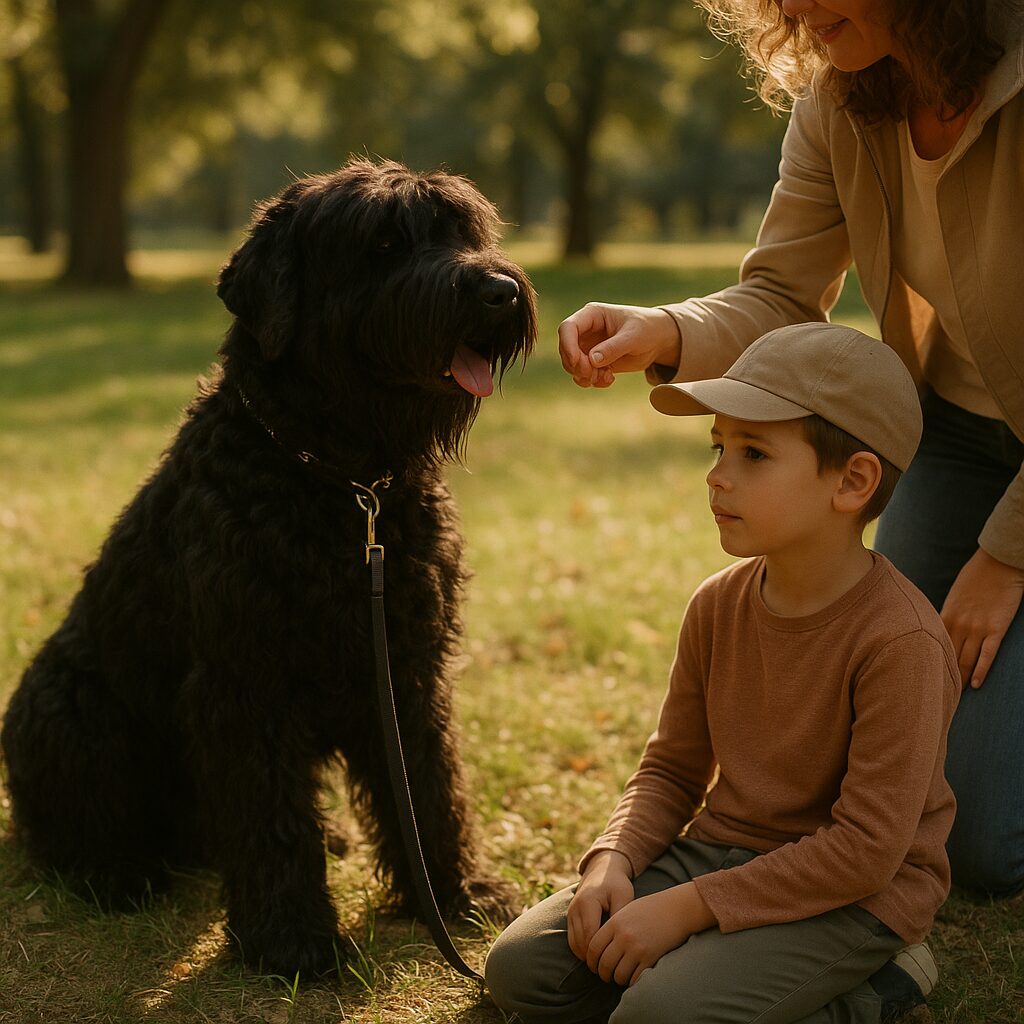
The versatility of the BRT is evident both in professional and domestic roles. In the field, its strength and endurance make it effective for protection, patrol, and intervention missions. At home, with proper training, it becomes a calm and patient partner, capable of accompanying family activities and cohabiting with vigilant children. Warning: a dog without stimulation quickly becomes a source of problematic behaviors.
- Professional guarding: deterrence, intervention with an experienced handler.
- Family companion: protective but affectionate with known people.
- Canine sports: obedience, tracking, protection work when trained.
Choosing a Black Russian Terrier: questions to ask the breeder
Before making any decision, clarify the intended use and check the litter’s background. Ask for health test results (hips, elbows), the puppies’ socialization environment, and observe the interaction between the mother and the siblings. A good breeder will provide health reports, explain the bloodlines, and give you clear indications about the expected temperament. Avoid “low-cost” litters: the size of this dog requires significant care and veterinary investment.
Adopting rather than buying: a realistic option
Adults may be available for adoption, sometimes after a career in security. The advantage is twofold: you give a second chance and avoid the uncertainty of growth. The possible drawback is that an adult arriving with educational gaps will require more professional support. In any case, the transition must include a behavioral assessment and a gradual reintegration plan.
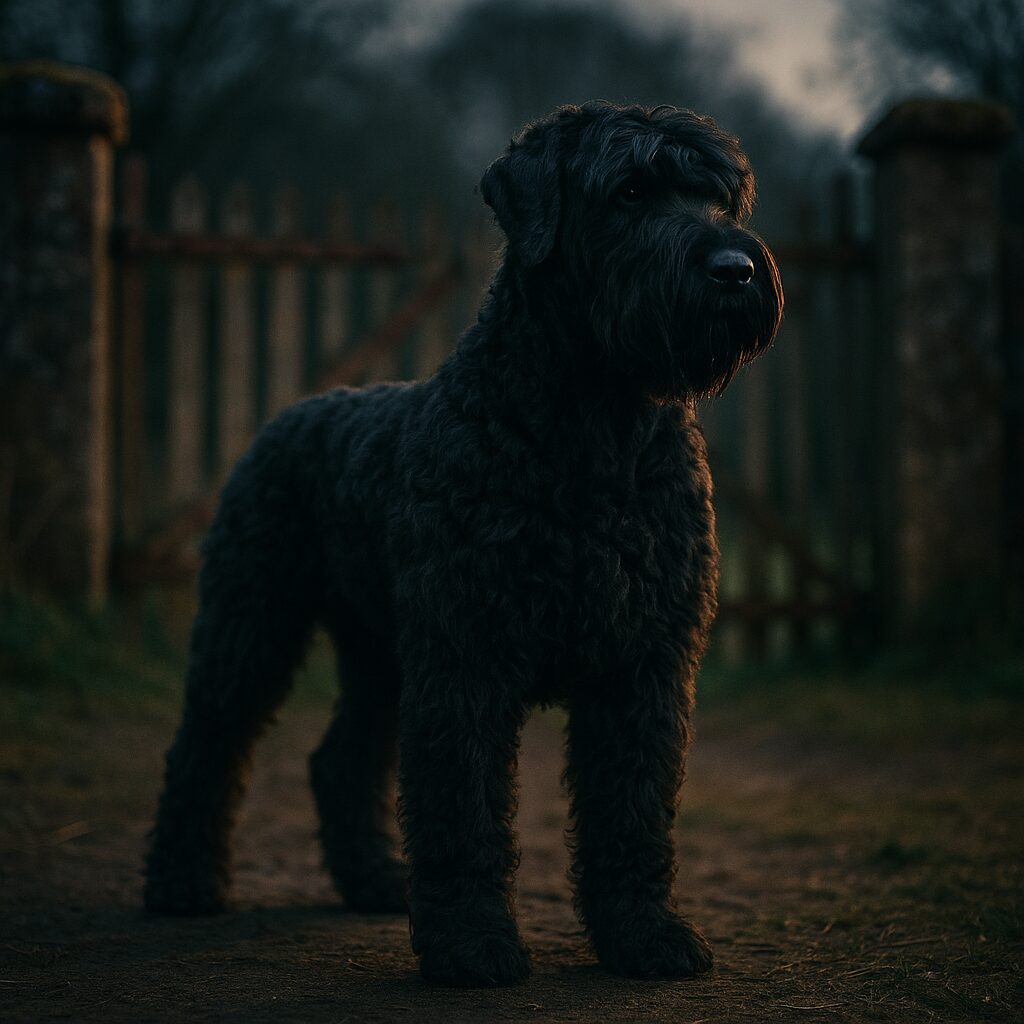
Education and socialization: the pillars of a balanced dog
Training the Black Russian Terrier tolerates neither brutality nor laxity. The key lies in consistency: clear rules, precise rewards, and varied exercises. Early socialization — exposing the puppy to noises, people, other dogs, situations — greatly reduces the risk of excessive reactions in adulthood. During the first months, aim for short but frequent sessions, gradually expanding the contexts.
- Basic obedience: sit, lie down, recall — essential for safety.
- Excitement control: structured games and stop exercises.
- Habituation: urban places, vehicles, varied contacts to avoid fear.
For owners without experience with working dogs, working with a specialized dog trainer is recommended. Positive methods, complemented by controlled situational exercises, create reliable responses without breaking the dog’s motivation.
Care and health: realistic for the long term
The Black Russian Terrier lives on average 10 to 14 years, with variations depending on genetics and care. The most frequent conditions include hip dysplasia, joint problems, and some dermatological issues related to the dense coat. Regular check-ups — hip x-rays, weight monitoring, joint assessments — prevent major complications. The diet must correspond to the rapid growth of a large dog and be adjusted to preserve the joints.
| Characteristic | Details |
|---|---|
| Size | Males 72–76 cm / Females 68–72 cm (approximate according to standards) |
| Weight | 40–60 kg depending on build |
| Life expectancy | 10–14 years |
| Coat maintenance | Regular brushing, grooming every 2–3 months |
Physical activity and mental stimulation
An inactive Black Russian Terrier quickly gets bored and may develop destructive behaviors. You don’t need daily marathons, but consistency: one-hour outings, structured games, scent exercises, and gentle muscle training sessions. Mental stimulation — puzzle feeders, learning new commands, object searches — is just as crucial as physical exercise. Think quality rather than quantity: short but stimulating sessions build confidence and obedience.
Comparison with other guard dogs
The Black Russian Terrier shares common traits with other guardian breeds: loyalty, strength, need for stable leadership. Unlike a Chow Chow, often more independent and distant, the BRT generally remains more oriented toward cooperation with humans. These nuances determine the type of suitable owner: if you seek a close but firm dog, the BRT may fit; if you prefer a more autonomous and reserved guardian, breeds like the Chow Chow offer other advantages.
Summary table: BRT vs other guardians
| Criterion | Black Russian Terrier | Other guardians (e.g., Rottweiler, Mastiff) |
|---|---|---|
| Reserve towards strangers | High | Variable (often high) |
| Trainability | Average to good (consistency required) | Variable (some more stubborn) |
| Coat maintenance | High | Low to medium depending on breed |
Breeding and responsible raising
Raising a Black Russian Terrier requires rigor: genetic testing, selection of breeders to reduce hereditary risks, and adherence to the standard. Future mothers need enhanced veterinary monitoring, and serious breeders offer clear contracts, health assessments, and after-sales support. If you consider breeding, commit long-term; responsible breeding is not compatible with improvisation.
Some practical advice for future owners
- Visit several breeders and compare living conditions.
- Plan a budget for food, grooming, insurance, and possible orthopedic care.
- Invest in education from the start: group classes and professional support if needed.
- Arrange the space: a dog of this size needs spacious resting areas and secure outdoor access.
FAQ — Frequently Asked Questions
Is the Black Russian Terrier suitable for apartment living?
It can adapt to a spacious apartment if its physical and mental needs are met through regular outings and structured activities. However, housing without outdoor access makes cohabitation more demanding.
Is it a good dog for a family with children?
Yes, if it has been socialized and properly trained. However, its size requires supervision, especially with young children, to avoid accidents related to the dog’s strength.
Is grooming complicated?
The coat requires significant maintenance: frequent brushing to avoid tangles, regular trims according to aesthetic preference, and hygiene checks (ears, nails). The cost and time must be taken into account.
What is the average annual maintenance cost?
Depending on the region and level of care, consider quality food, periodic professional grooming, vaccinations, and veterinary check-ups: the annual budget can be high. It is better to allow a margin for unexpected medical expenses.
Can a BRT be left alone for a long time?
Not regularly. This dog prefers human presence and stimulation; long absences encourage boredom and undesirable behaviors. If the schedule requires it, arrange solutions: dog-sitter, additional walks, or automated stimuli.