

| Key Points | Details to Remember |
|---|---|
| 🐾 Origin | Originating from Hungary, related to plains herding dogs |
| 🎯 Character | Intelligent, lively, versatile, and very attached to its family |
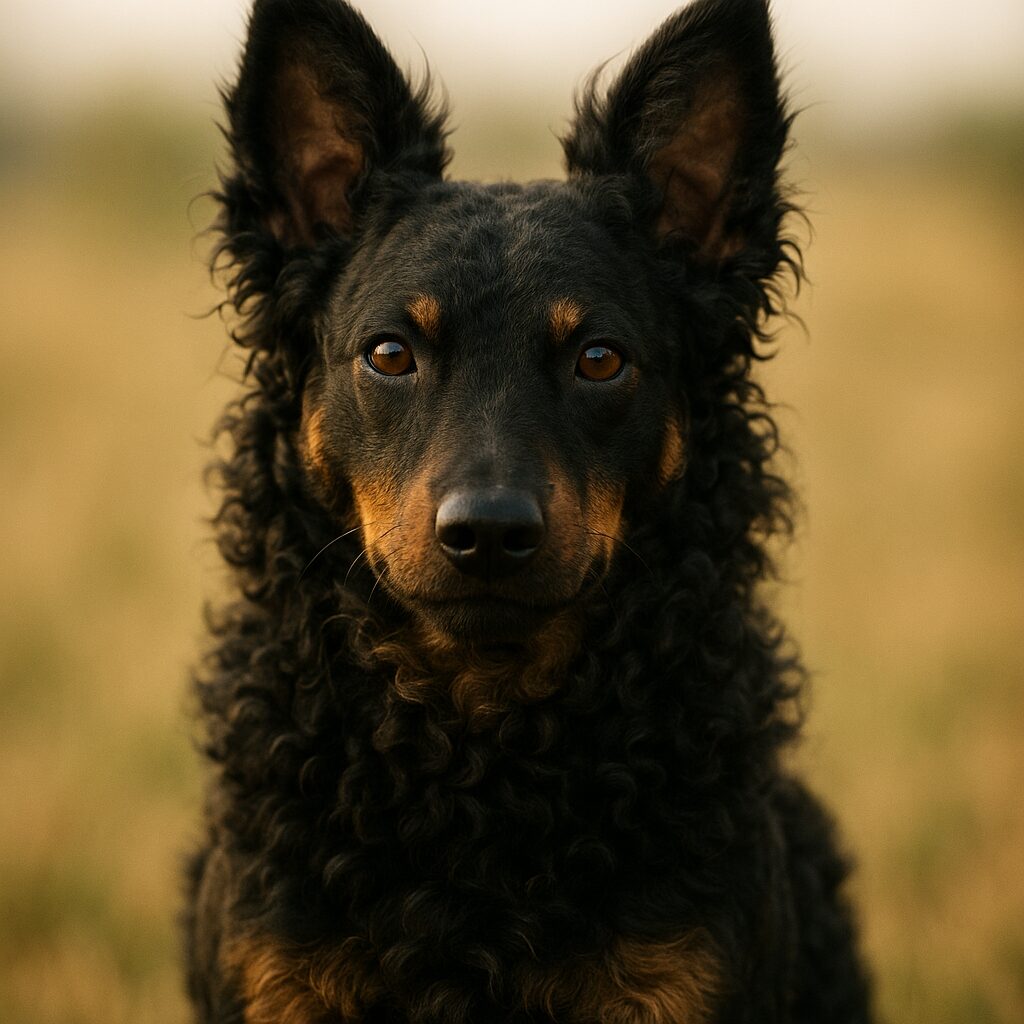
| 📐 Appearance | Erect ears, coat often wavy to curly, medium build |
| 🏋️ Activities | Requires mental and physical stimulation: agility, herding, canine sports |
| 🩺 Health | Robust but watch out for eye and hereditary diseases |

The Mudi remains a charming curiosity in the canine world: a medium-sized Hungarian herding dog, it stands out for its explosive energy, versatility at work, and erect ears that give it an expression both alert and mischievous. Less known than the Komondor or the Puli, it nevertheless deserves to be considered by active families and canine sports enthusiasts. Here you will find a complete and practical guide to understand its history, recognize a good specimen, organize its training, and anticipate essential care.
Origin and place in Hungarian history
The roots of the Mudi lie in the Hungarian countryside, where agile dogs were necessary to guard and gather herds on varied terrain. Unlike other more imposing breeds, the Mudi was selected for its mobility, sense of observation, and ability to work independently with shepherds. Over time, it has also distinguished itself in less agricultural tasks: rodent hunting, mobile guarding, and more recently, agility and obedience competitions.
The official recognition of the breed is relatively recent, which partly explains its rarity internationally. However, its profile remains well defined: versatile in the field, it adapts to varied climatic conditions and quickly develops a collaborative relationship with an invested owner. One can clearly see the human selection that favored efficiency over ostentatious beauty.
Appearance and standard: how to recognize a Mudi?

The Mudi sports a compact but athletic build: a proportionate body, muscular limbs without heaviness, and above all, naturally erect ears that betray its liveliness. Its coat varies — smooth, wavy, or curly — and can present several colors, from black to brindle, including tan. The expression of the muzzle is often compared to that of a worried but intelligent fox.
| Characteristic | Detail |
|---|---|
| Height | About 33–42 cm at the withers depending on sex |
| Weight | Generally 7–13 kg |
| Coat | Wavy to curly, varied colors |
| Ears | Erect, mobile, often triangular |
| Life expectancy | About 12–14 years |
The standards emphasize balance and mobility rather than a heavy silhouette. In a well-conformed specimen, you will see a supple neck, a stable back line, and a naturally carried tail, neither too curled nor stiff. The overall gait should radiate liveliness and the ability to react.
Temperament: working spirit and attachment
The Mudi has a paradoxical character: it is both independent in carrying out tasks and deeply oriented towards humans. This dog likes to think — in the canine sense of the term — take initiatives and solve new situations. However, it is not distant; it develops a strong attachment and obvious loyalty towards its family.
Relations with children and other animals
Well socialized, the Mudi shows gentleness with children, but retains a keen sense of hierarchy and respect for boundaries. It can be playful, sometimes a bit direct in its invitations to play, which requires initial supervision. With other dogs, it can be enterprising: early socialization is essential to avoid any intolerance or excess enthusiasm.
Behavior signs to watch for
- Hypervigilance: a Mudi that displays constant tension often needs more mental activity.
- Herding behavior: biting ankles or pushing can occur in subjects very oriented towards animal herding.
- Destruction due to boredom: leaving a Mudi unoccupied for several hours without stimulation frequently leads to domestic hyperactivity problems.
Training: effective methods for an intelligent dog
With sharp intelligence, training the Mudi requires consistency, variety, and well-chosen rewards. Methods based on positive reinforcement work particularly well: treats, toys, or vocal praise trigger faster engagement than simple coercion. You will achieve better results by breaking learning into small steps and maintaining short but frequent sessions.
Recommended activities
- Agility: the liveliness and flexibility of the Mudi make it an excellent candidate.
- Advanced obedience: ideal for channeling its intelligence and willingness to learn.
- Herding work: if you have access to suitable grounds, this is the most fulfilling activity.
- Scent games and search: stimulate the mind and concentration.
Varying activities is key: a Mudi that alternates physical tasks and cognitive challenges will remain balanced. A patient, consistent, and creative owner quickly gains enthusiastic cooperation.
Health and care: prevention and hygiene
Overall robust, the Mudi is nonetheless sensitive to certain hereditary conditions — notably eye problems and occasional joint disorders in highly active individuals. Regular veterinary check-ups, screening for eye conditions in breeders, and appropriate nutrition throughout life remain guarantees of a serene longevity.
Coat maintenance and grooming
The Mudi’s coat requires regular but not excessive maintenance: weekly brushing is sufficient for most subjects, with reinforcement during shedding periods. The erect ears must be checked for any irritation or dirt accumulation; they are less prone to ear infections than drooping ears, but attention remains necessary.
Table of common care
| Care | Recommended frequency |
|---|---|
| Brushing | Once a week, more during shedding |
| Ear check | Twice a month |
| Dental hygiene | 2–3 times a week minimum |
| Veterinary visit | Once a year, more often if problem |

Choosing a Mudi: breeder, shelter or responsible adoption
You will find Mudis at specialized breeders and, more rarely, in shelters. Buying from a reputable breeder involves health guarantees: eye tests, relevant genetic screenings, parent traceability, and puppy follow-up. Avoid uncontrolled sources that cannot provide these documents. Adopting an adult Mudi can be an excellent option if you are looking for a dog already socialized and possibly already trained.
Questions to ask the breeder
- What genetic and eye screenings have been performed on the parents?
- How are the puppies socialized and at what age do they leave the mother?
- What post-sale support does the breeder offer (advice, health guarantees)?
A responsible breeder will gladly talk to you about bloodlines, predictable temperaments, and the breed’s specific needs. If you doubt the answers provided, take your time: a Mudi requires long-term investment and it is better to delay an impulsive adoption.
Living daily with a Mudi
The Mudi thrives with active people ready to devote time to physical and mental activity. It tolerates apartment living provided it is taken out regularly and involved in structured activities. Long walks, training sessions, and interactive games form the essential trio for living in harmony.
“A well-occupied Mudi is a happy companion.”
FAQ — frequently asked questions
Does the Mudi bark a lot?
The Mudi is alert and may bark to warn. With training that channels this behavior (stop commands, positive reinforcement when calm), excessive barking can be controlled. It prefers to warn rather than remain passive.
Is this breed suitable for a beginner owner?
For a motivated novice, the Mudi can be suitable if they accept learning the basics of positive training and dedicating time to activities. For a person with little availability, the breed may be frustrating.
How does it behave with other pets?
The Mudi can live with other animals if socialized early. However, its herding instinct may push it to “correct” behaviors, so be careful with small animals not protected against this type of interaction.
What budget should be planned?
Besides the purchase or adoption cost, plan for quality food, vaccines, possible sterilization, training equipment, and sports activities. The annual budget varies depending on care but remains within the average for medium-sized breeds.
Summary and practical advice
If you are looking for a lively, loyal companion capable of excellent sporting performance, the Mudi deserves your attention. It demands commitment: stimulation, socialization, and health monitoring. In return, it brings curiosity, intelligence, and an active presence at home. Before making any decision, meet several individuals, talk to breeders, and observe the dog’s behavior in varied situations — play, work, domestic calm. This pragmatic approach will allow you to measure the real match between your expectations and the Mudi’s temperament.