
| Key Points | Details to Remember |
|---|---|
| 🐾 Origin | Descends from ancestral guard dogs of the Tibetan plateau |
| 🛡️ Character | Shows independence, loyalty, and a sense of protection |
| 🏃 Needs | Requires moderate exercise, mental stimulation, and early socialization |
| 🛁 Grooming | Needs regular brushing and attention during shedding periods |
| 🩺 Health | Follow hereditary screenings and regular veterinary check-ups |
| 🏡 Adoption | Prepare space, rules, and long-term commitment |

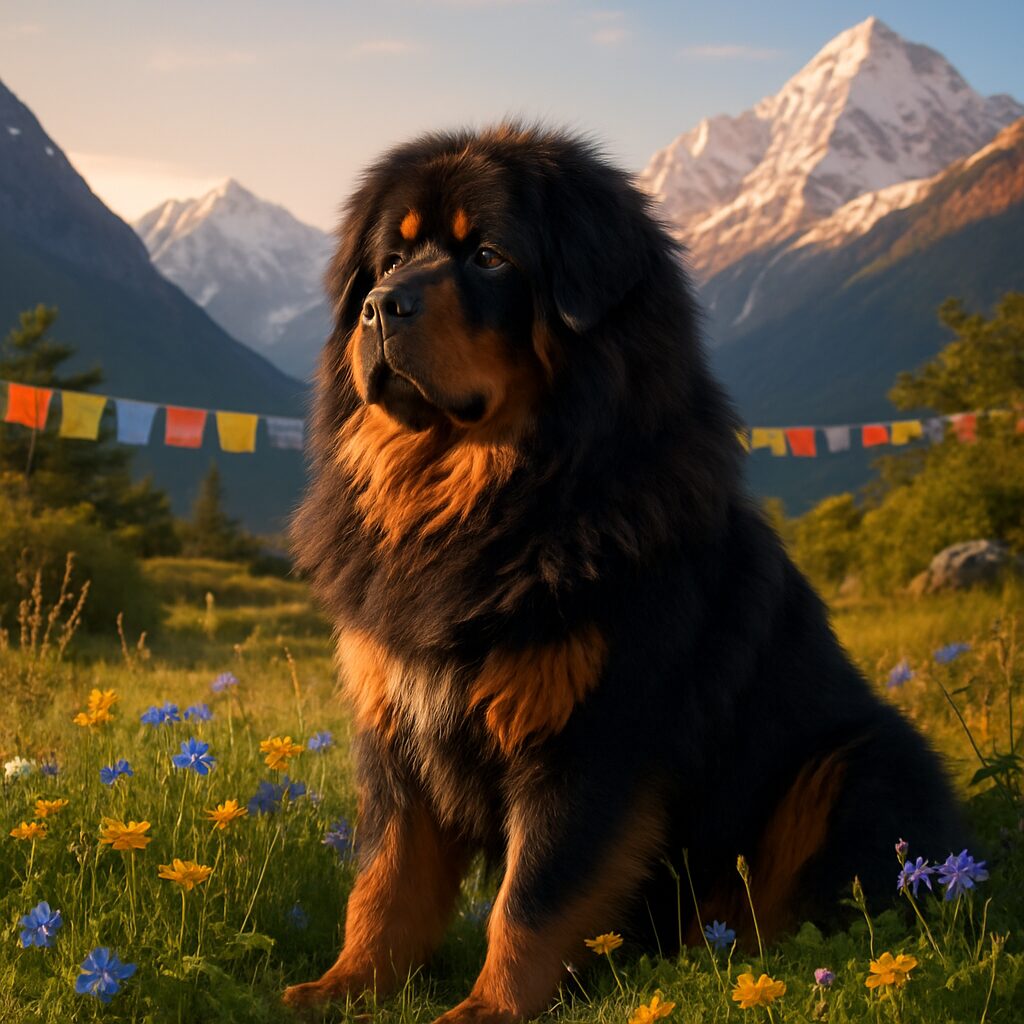
The Tibetan Mastiff — often called the Tibetan mastiff — fascinates as much by its imposing size as by its almost mystical aura. It is not an all-purpose dog: it combines independence, guarding instinct, and a deep need to be understood. If you are considering adopting one, it is better to grasp its nuances rather than give in to a trend. This guide covers character, practical needs, health, training, and a checklist for successful adoption, with concrete advice for daily life.
Origins and history in brief
The origins of the Tibetan Mastiff plunge into centuries of pastoral life and monastery protection. Bred to guard herds and have minimal contact with strangers, it developed strong autonomous decision-making. It shares the robustness of mountain dogs: resistance to cold, massive bone structure, and a marked territorial instinct. This history explains much of the current temperament: closer to a guardian than an indifferent couch companion.
Appearance and standards
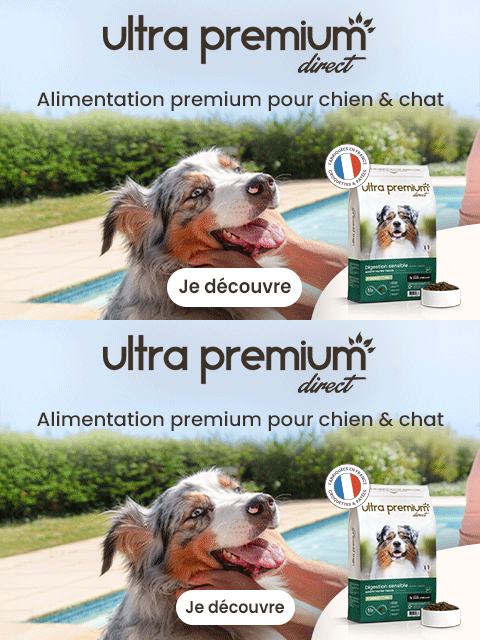
Visually, the Tibetan Mastiff impresses: broad skull, powerful jaw, dense fur forming a mane in males. Individuals can exceed 70 cm at the withers and weigh over 60 kg. The coat ranges from black to fawn with various markings, often with a double texture — dense undercoat and longer outer coat.
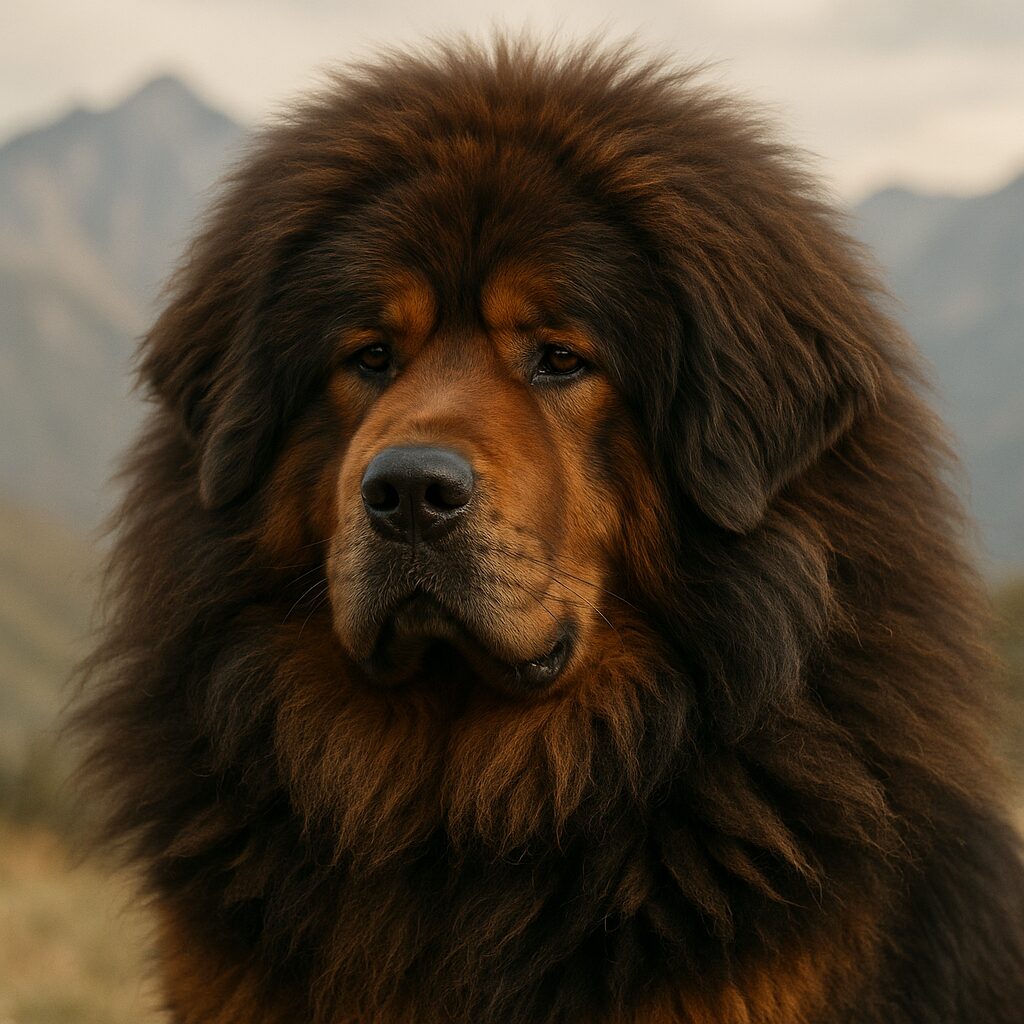
This size imposes logistical constraints: sturdy equipment, wide doors, adapted transport. Aesthetically, the build and gait give an impression of calm nobility but should not mask the dog’s behavioral demands.
Character: what makes the Tibetan Mastiff unique
Saying it is “protective” only scratches the surface. This dog combines intense loyalty to its family circle and caution — even distrust — towards strangers. Mental independence sometimes makes it less obedient than breeds raised for obedience. In other words: it learns quickly but often chooses to obey when it deems the action relevant.
Dominant traits
- Loyalty: deep attachment to the human pack.
- Independence: ability to take initiatives, sometimes perceived as stubborn.
- Protective instinct: vigilant, signals and intervenes if necessary.
- Calm: tendency to conserve energy, except during alert periods.
Compatibility with the family
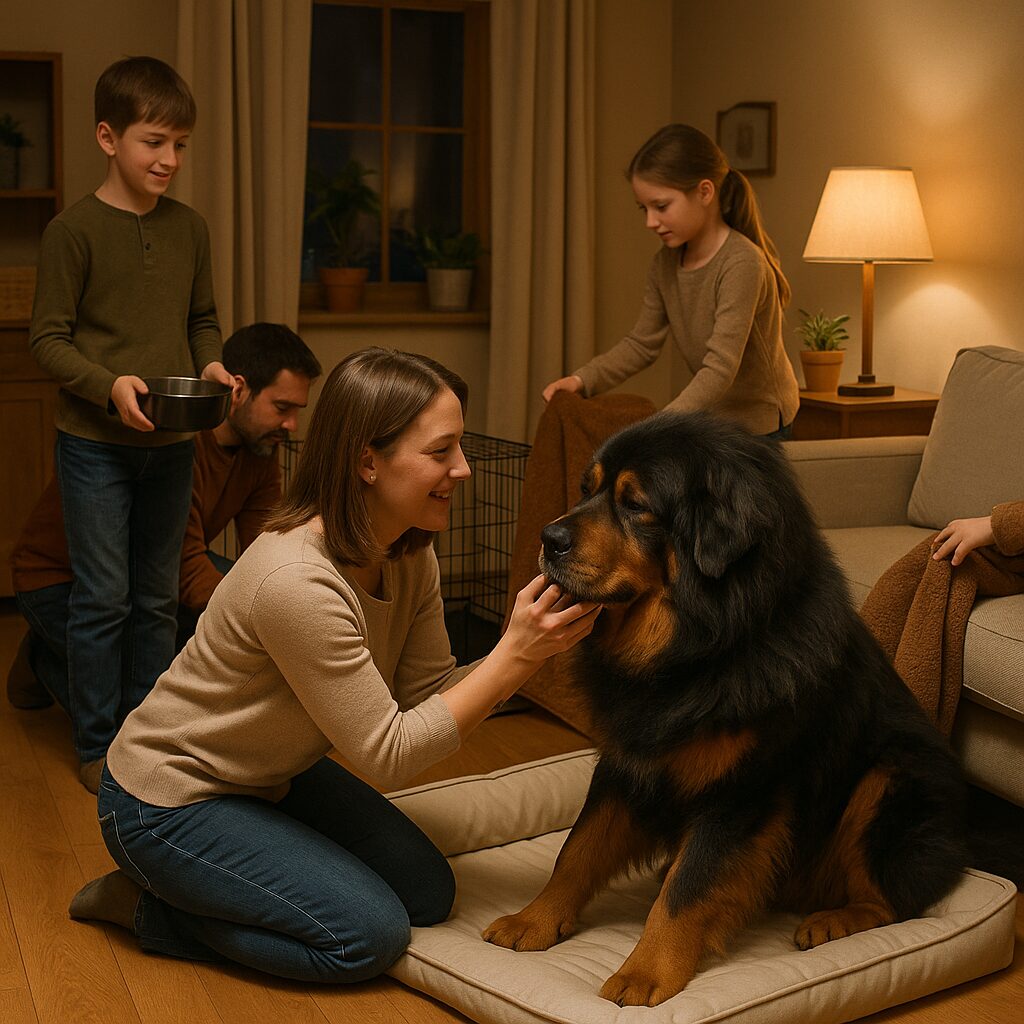
In a household, he can be an excellent companion for responsible adults and teenagers. With young children, caution is necessary: the size and strength combined with a lack of tolerance for roughness require supervision and early education. Socialized early, he learns to accept visits and newcomers without dramatizing.
Daily needs: exercise, mental stimulation, and grooming
There is often the misconception that a large dog = infinite need for exercise. Not quite: the Tibetan Mastiff prefers calm but regular activities. The key is to stimulate the mind as much as the body.
Physical exercise
- Daily walks of 1 hour, divided if necessary.
- Secure spaces to allow curiosity to be expressed without constraint (enclosed area, long hike).
- No intense and repeated effort for the young puppy: protected growth.
Mental stimulation
Obedience work, object search games, and cognitive courses reduce boredom. An under-stimulated Tibetan Mastiff can develop undesirable behaviors: barking, marking, or tendency to run away. Short, regular, and varied sessions are often enough to channel the dog’s intelligence.
Grooming
The coat requires a routine: weekly brushing, intensified during shedding seasons to avoid knots and limit hair in the house. Occasional baths, regular checks of ears and nails complete the maintenance. For busy owners, planning a professional for managing shedding phases can be a good investment.
Health and longevity
Longevity generally ranges between 10 and 14 years. Like many large breeds, the Tibetan Mastiff is subject to specific risks: hip dysplasia, eye problems, hypothyroidism, and certain skin conditions. Genetic screening at the breeder and regular veterinary follow-up are guarantees of longevity and quality of life.
Vaccinations, screening, and prevention
- Orthopedic checks (hips and elbows) before breeding.
- Eye exams and thyroid assessment from adulthood.
- Weight monitoring to reduce pressure on joints.
Education and socialization
The ideal educational approach combines calm firmness and consistency: a Dog reacts better to a composed leader than to aggressive authority. Reward-based techniques work well, especially if they respect the dog’s autonomy. Early socialization — varied encounters, noises, humans, and other animals — structures his tolerance of the outside world.
Practical advice
- Start education as soon as he arrives home, with clear routines.
- Encourage gradual exposure to visitors and other dogs.
- Use cooperative games to strengthen the owner-dog bond.
Adopting a Tibetan Mastiff: what options?
Two paths are available: breeder or adoption in a shelter. The breeder allows you to know the lineage, screening, and receive targeted advice; adoption gives a second chance to a dog sometimes already socialized. Whatever the choice, check transparency (health certificates, breeding conditions, behavior of the puppy/adult) and evaluate your capacity to commit for 10+ years.
| Aspect | To plan for |
|---|---|
| Housing | A secure outdoor area and indoor space |
| Time | Presence and regular training |
| Budget | Veterinary fees, quality food, sturdy equipment |
| Skills | Patience, consistency and knowledge in training |
Estimated cost and recurring expenses
Purchasing from a breeder can be expensive due to testing and pedigree. Additionally, consider quality food, veterinary prevention, equipment (corresponding to a large size) and possibly a trainer. It is better to establish a realistic annual budget rather than only anticipating the purchase price.
Who is the Tibetan Mastiff for?
This dog suits people wanting a protective companion, ready to invest time and educational efforts. Novice owners should consider support from a dog trainer. The Tibetan Mastiff is not suitable for cramped apartments without regular outings nor for households seeking an ultra-obedient and docile dog in all situations.
Checklist before adoption
- Visit the breeding place or shelter, observe the dog’s behavior.
- Request health records and any tests.
- Prepare a living space and specific equipment (kennel, large bed, sturdy bowls).
- Plan a first veterinary check-up within the month following arrival.
- Provide for training sessions and a support network (veterinarian, behaviorist).
FAQ
Q: Can the Tibetan Mastiff live in an apartment?
A: Possible if compensated by frequent and long outings, but ideally a house with a secure outdoor area: its size and need for space are better suited there.
Q: At what age should socialization begin?
A: From the first weeks respecting the vaccination schedule: gradual and positive exposure to people, noises, and other animals.
Q: Is it an aggressive dog?
A: Not inherently: it is protective and selective. Appropriate training prevents excessive behaviors.
Q: What type of food should be preferred?
A: Food rich in quality proteins, adapted to life stage and weight, with weight monitoring to prevent joint problems.