
| Key Points | Details to Remember |
|---|---|
| 🦊 Definition | Nordic breed of dog, with behavior close to that of the wild fox. |
| 🎶 Signature | Atypical vocalization: a modulated bark often described as a “song”. |
| 🏃 Activity | Significant needs for exercise and mental stimulation. |
| 🧼 Maintenance | Simple grooming but marked seasonal shedding. |
| 👪 Temperament | Affectionate with family, sometimes reserved with strangers. |
| 🏡 Adaptation | Suitable for active households, less so for strictly urban life without outings. |

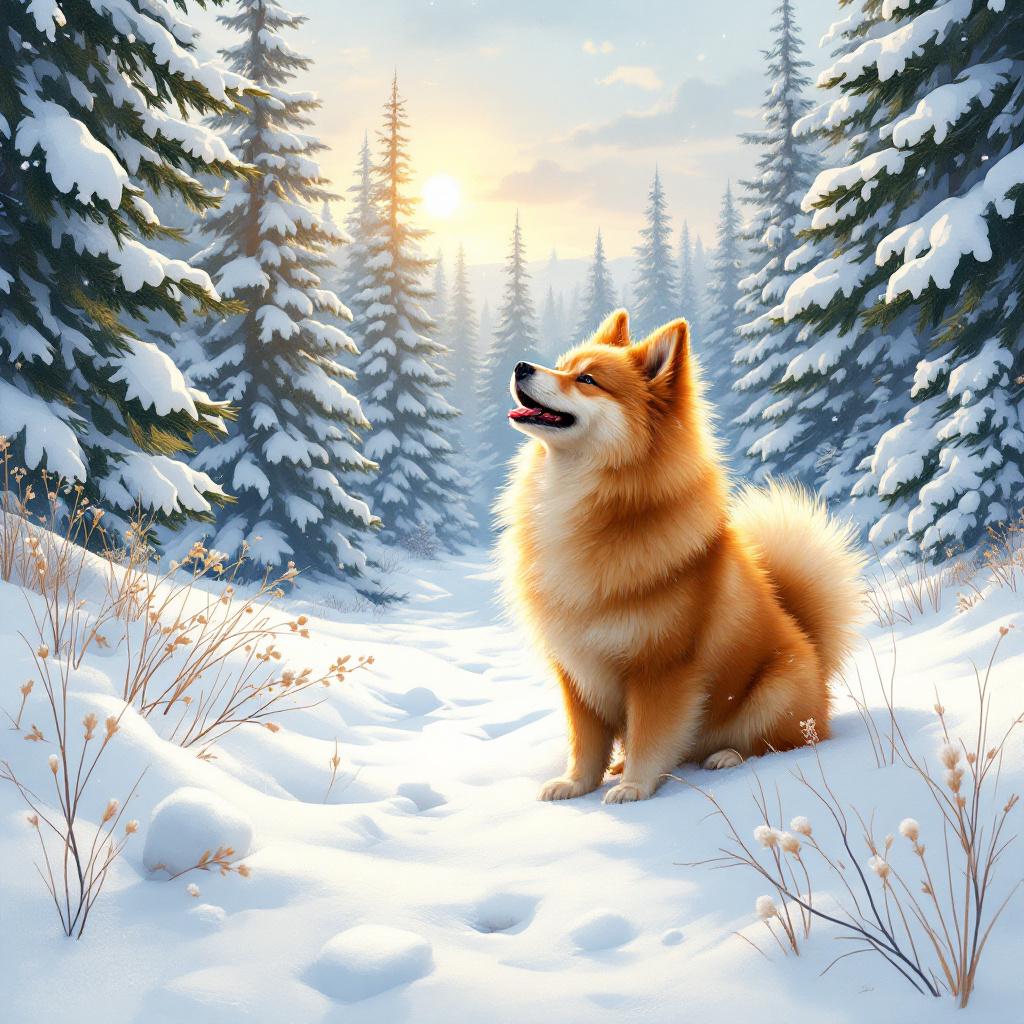
The Finnish Spitz, often described as the “singing fox” of the Far North, does not go unnoticed: elegant silhouette, erect ears, and surprising voice. Originating from Finland, this breed was shaped by centuries of small game hunting and adaptation to boreal expanses. One might easily imagine a miniature wolf, but the Finnish Spitz has its own sensitivity and sociability, making it also prized as a family companion. This article guides you step by step: history, physical traits, temperament, training, and practical advice for living harmoniously with this dog with a strong personality.
Origins and History
The genesis of the Finnish Spitz is lost in the wooded regions and lakes of Finland. The breed’s main role was to search for and locate game — hares, squirrels, small birds — before the hunt was completed by the hunter. This alert behavior is still heard today in its characteristic bark, which served to signal the position of the game without attracting the predator.
From Hunting Dog to Modern Companion
Over time, selection focused not only on hunting efficiency but also on qualities suited to household life. The Finns preserved the robust morphology and protective double coat while the temperament was refined: loyalty, lively spirit, and the ability to create a strong bond with its owner. The breed crossed Nordic borders through cultural exchanges and dog shows, explaining its presence on several continents today.
Morphology and Silhouette

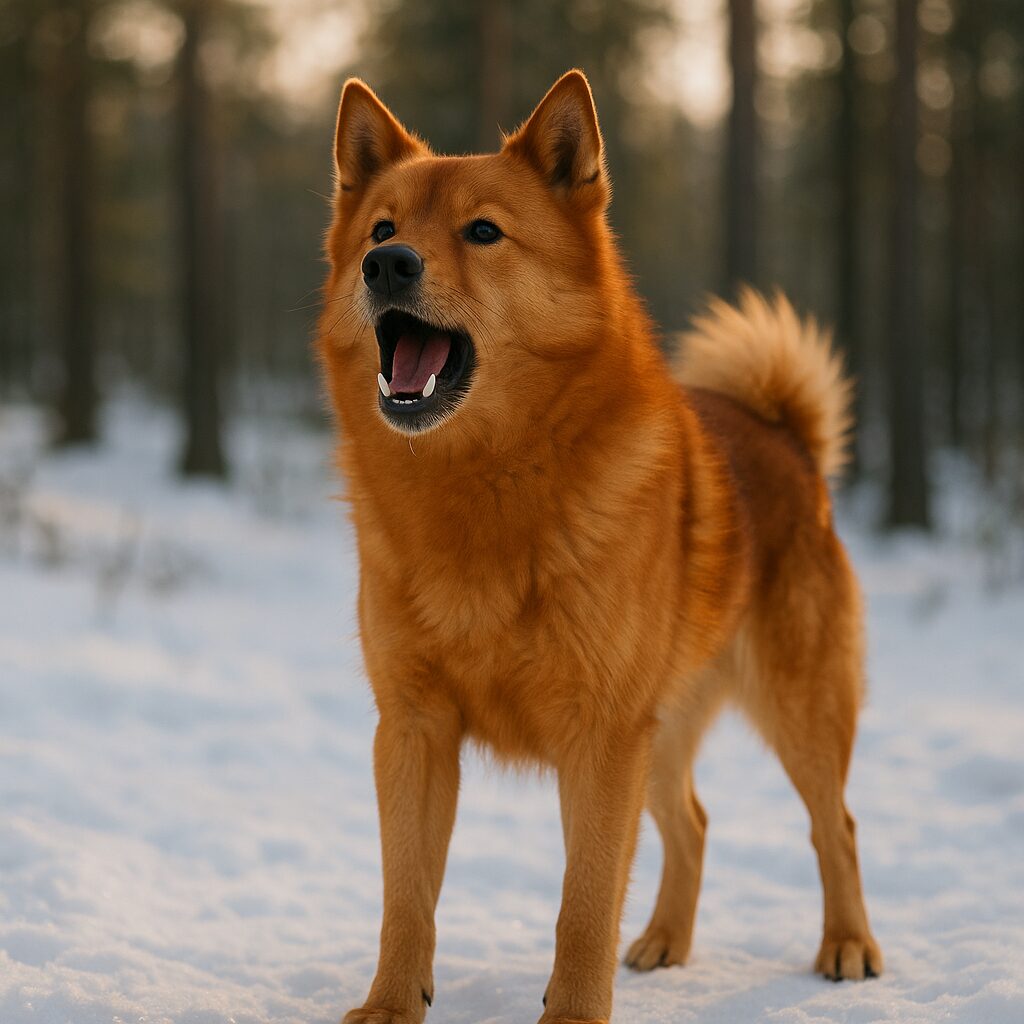
The silhouette resembles a fox: straight back, tail carried curled over the back, fine muzzle. The lines are clear, the posture alert. The double coat — dense undercoat and longer guard hairs — protects against cold and bad weather.
| Characteristic | Male | Female |
|---|---|---|
| Height at the withers | 43–48 cm | 38–44 cm |
| Approximate weight | 11–16 kg | 9–14 kg |
| Coat | Fiery red, red and reddish-brown, sometimes with golden shades; chest and extremities often lighter. | |
Character and Behavior
The Finnish Spitz combines lively curiosity and independence tempered by clear loyalty to its family. It is not intrusive but demands quality in relationships: respect, clear routines, and regular stimulation. Patient children will find a playful companion in it, while strangers may provoke some reserve.
The song: more than just a simple bark
The most commented characteristic remains its “song.” It is not a simple repetition of barks: the sequence is modulated, sometimes rhythmic, with pauses and tone variations. When hunting, this song fixed the game and guided the hunter. At home, it manifests when the dog detects something unusual, is bored, or wants to attract attention. To avoid nuisances, early education and alternating activities are essential.
Relations with other animals
Like many dogs with a hunting background, the Finnish Spitz may exhibit a strong chase instinct. Well socialized from a very young age, it will coexist with conspecifics and sometimes cats, but caution remains necessary with small pets such as rodents or birds. Observation and gradual meetings allow for establishing calm foundations.
Education and exercise needs
For a naturally independent dog, education requires gentle firmness and consistency. Positive methods work very well, especially those that use play and rewards. Basic commands — sit, stay, recall — must be practiced in varied situations to remain reliable outdoors.
- Recall: work on a long line then progressively off-leash, as the tracking instinct can take it far.
- Mental stimulation: scent games, food puzzles, search sessions; essential to channel its intelligence.
- Physical exercise: long walks, hikes, non-intensive retrieving games; minimum one hour per day, often more for young and sporty subjects.
- Socialization: regular canine meetings from puppyhood to prevent shyness or aggressiveness.
A poorly exercised Finnish Spitz quickly develops boredom which manifests as noise, destruction, or escape behaviors. It is better to imagine structured days where sport, stimulation, and rest alternate harmoniously.
Health, maintenance, and longevity
A generally robust breed, the Finnish Spitz has an interesting longevity, often between 12 and 15 years. Routine maintenance is limited to regular brushing, intensified during the winter or spring molt when the undercoat renews.
Grooming and care
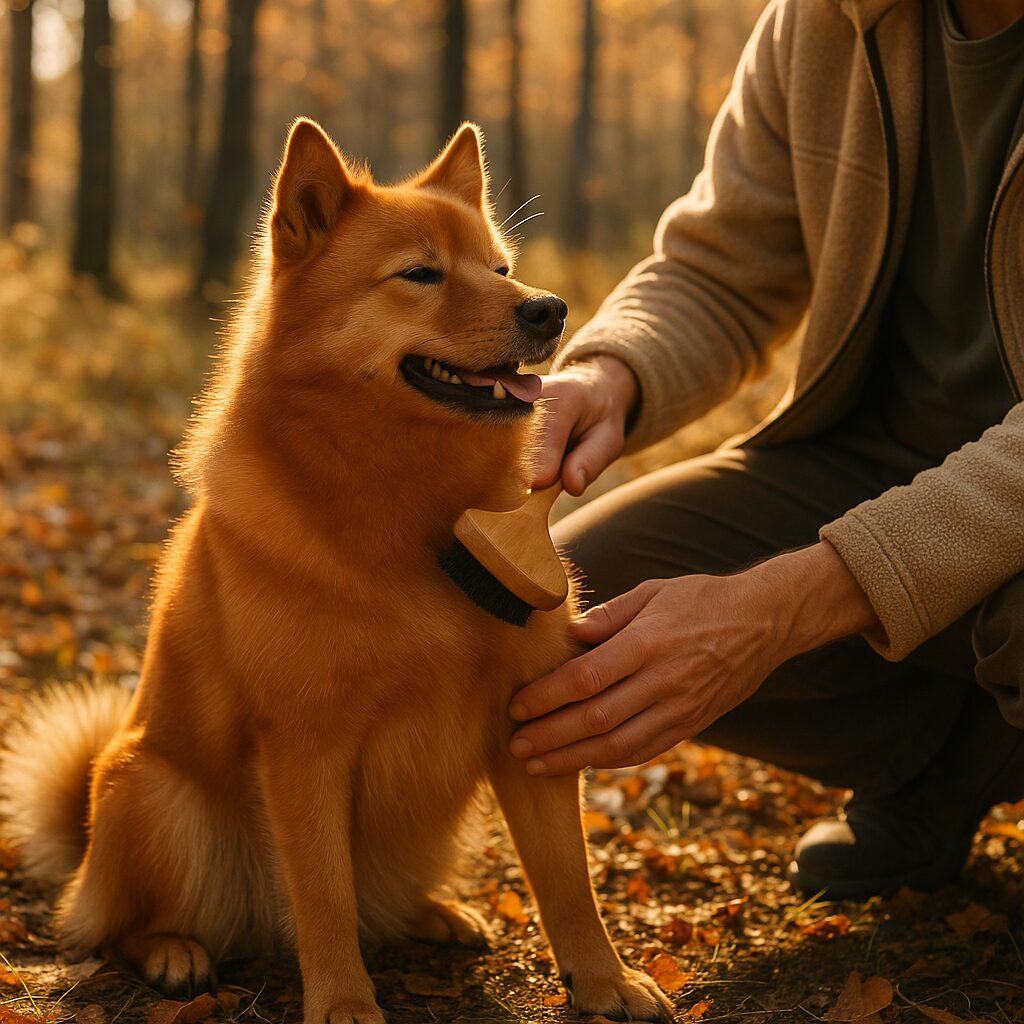
Weekly brushing is sufficient most of the time; increased attention is necessary during the molt where daily sessions reduce loose hairs in the house. The erect ears require occasional checks to avoid earwax buildup, particularly after long runs in the forest.
Known health issues
Occasionally hereditary eye disorders are observed in certain lines as well as a moderate predisposition to orthopedic conditions. Screening in breeders and reasonable selection help limit these risks. A balanced diet and adapted activity support muscle mass and joint health.
Is it right for you?
Before adopting, ask yourself simple but decisive questions. Do you have time for walks and training? Does your home allow easy outings? Are you looking for a vocal and expressive companion, or a discreet dog? The Finnish Spitz suits active households, ready to accept a certain vocal expressiveness and sometimes stubborn intelligence.
- Suitable for active families who enjoy outdoor outings.
- Less suitable for apartment dwellers without frequent access to the outdoors.
- Good companion for a patient owner, consistent in training.
Practical advice for adoption
Meet several representatives of the breed, ideally with recognized breeders or shelters where you can observe behavior in context. Ask for the health records of the parents and favor visits to breeders who perform genetic screening. If you choose a puppy, check early socialization, and prepare a training plan based on rewards.
A well-integrated Finnish Spitz often becomes an irreplaceable companion: alert, affectionate, and loyal, with a personality that deserves to be understood to get the best out of it.
FAQ
Does the Finnish Spitz bark all the time?
No, it does not bark continuously, but it has a predisposition to vocalization. With training, stimulation, and a stable routine, inappropriate episodes are significantly reduced.
Can it be left alone all day?
Not ideally. Prolonged absences encourage boredom and stress. If you work, plan long walks in the morning and assistance (pet sitting, dog walker) to break up the waiting time.
Is it a hypoallergenic breed?
No. The Finnish Spitz sheds hair, especially during seasonal molts; it is therefore not recommended for highly allergic people.
What is the best diet?
A quality food adapted to age, size, and activity level. Good quality protein sources and calorie management that preserve muscle mass are essential for this active breed.
Is the Finnish Spitz easy to train?
Easy if you know how to vary methods: short sessions, rewards, games. Stubbornness may appear, so consistency is key.
Is it a good guard dog?
Yes, in that it alerts and warns with its bark, but it is neither aggressive nor particularly protective in the strict sense. It primarily signals.