| Key Points | Details to Remember |
|---|---|
| 🐕🦺 Instinctive Profile | Understand natural predispositions and needs |
| 🏠 Interior Arrangement | Create a safe and restful space |
| 🎓 Training Methods | Introduce progressive discipline exercises |
| 🧠 Mental Stimulation | Plan thinking and scent games |
| 🚶♂️ Physical Activity | Maintain an appropriate level of exercise |
| 🔄 Patience and Consistency | Establish a routine at regular intervals |

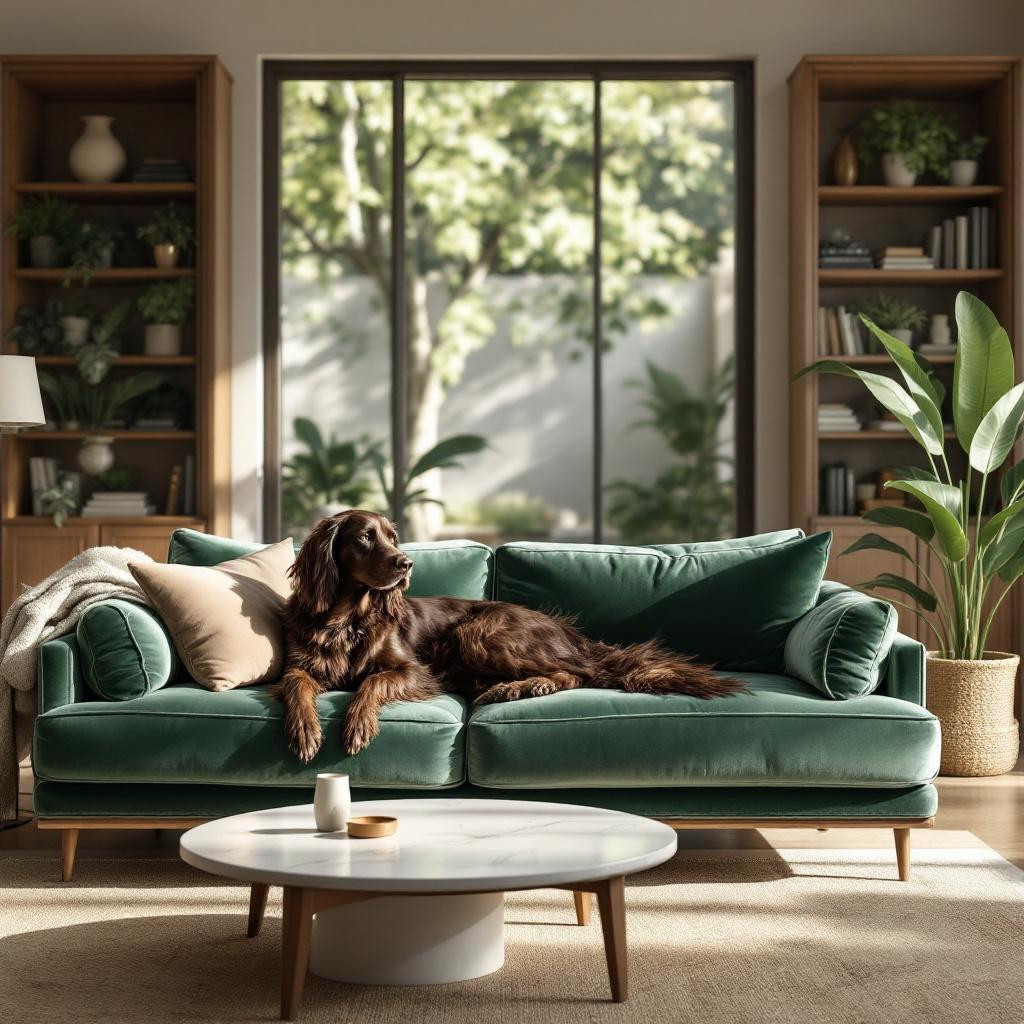
You are now ready to take your hunting dog out of the fields and comfortably settle them in your living room. This evolution is not just a change of scenery: it requires careful adaptation so that your companion agrees to trade the chase of game for the comfort of a home. Without rushing, discover how to arrange your interior, readjust your routines, and intelligently engage your dog’s instincts to successfully make this transition smoothly.
1. Understanding the Instinct and Past of the Hunting Dog
Before any transformation, one must decipher the deep profile of the animal. Hunting dogs inherit millennia of selection to flush out game, follow trails, and react quickly to stimuli. This expertise, valuable in the wild, can become a source of anxiety or boredom indoors. In reality, it is not a tracker that transforms overnight: you must recognize its strengths – powerful sense of smell, endurance, curiosity – and its limits – need for space, chase impulse.
1.1 Understanding Primary Needs
Characterized by a strong need for activity and stimulation, these dogs require:
- Long walks to release accumulated energy.
- Scent exercises to use their nose.
- Enhanced socialization, especially with other dogs.
If these points are ignored, the dog risks frustration, excessive barking, or destructive behaviors.
1.2 Adapting the Emotional Transition
Upon arrival in a new domestic environment, the dog may show anxiety or hypervigilance. Instead of reacting with punishments, prioritize:
- A refuge corner with familiar toys and a cushion.
- A calming presence: your voice, your petting.
- A gradual increase in stimulation.
This observation phase allows the dog to associate your living room with a safe place, not just a waiting area.
2. Arranging a Living Room Adapted to Its Balance

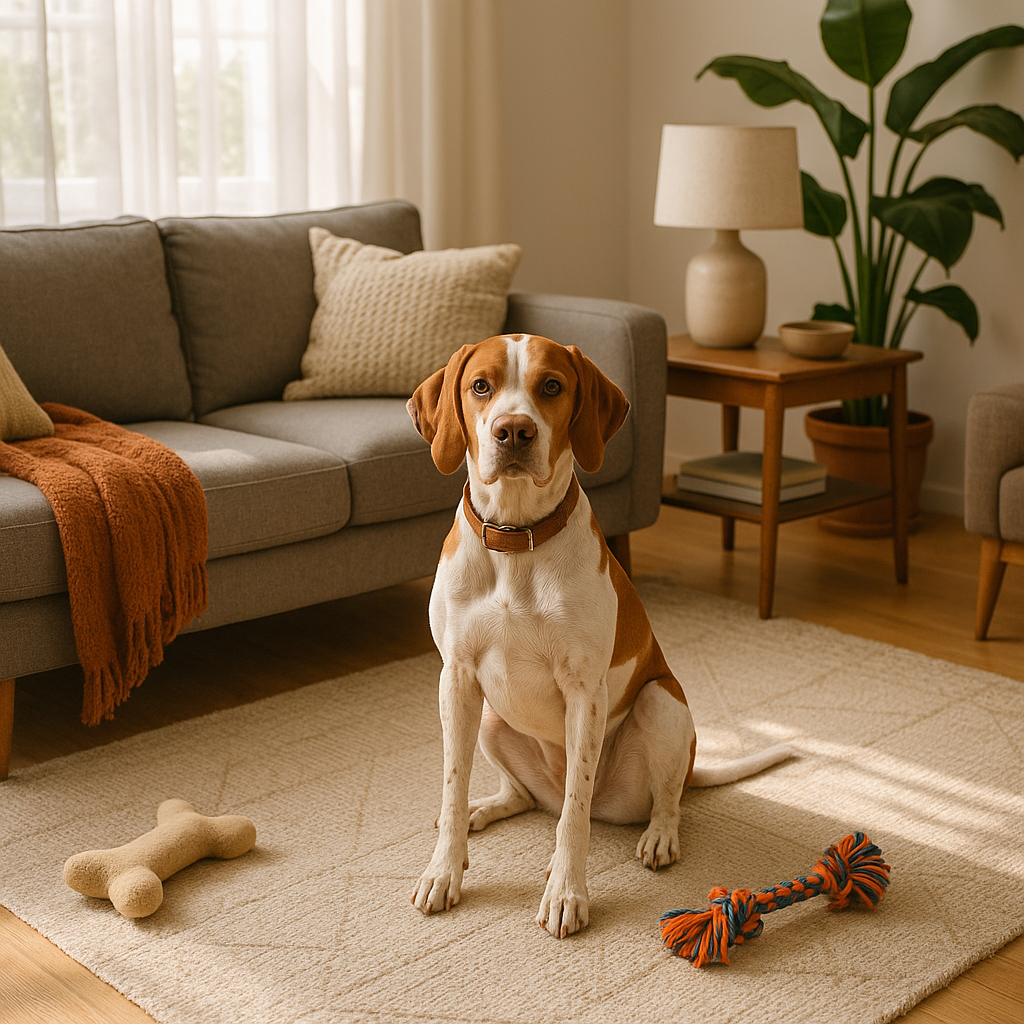
Far from the wide fields, your interior must meet both the need for rest and the desire to engage instinct. Here are some practical recommendations.
2.1 Furniture and Defined Areas
Defining a reserved space avoids confusion between the family living area and the canine zone. For example:
- A non-slip rug where the dog can roll without slipping.
- A modular barrier to define the “rest area”.
- Comfortable kennels or mats, away from frequent passages.
2.2 Toys and Enrichment
Slow feeders (or “puzzle feeders”) feed the mind while rewarding effort. Also consider:
- Scented balls to stimulate the nose.
- Strong ropes for tugging games.
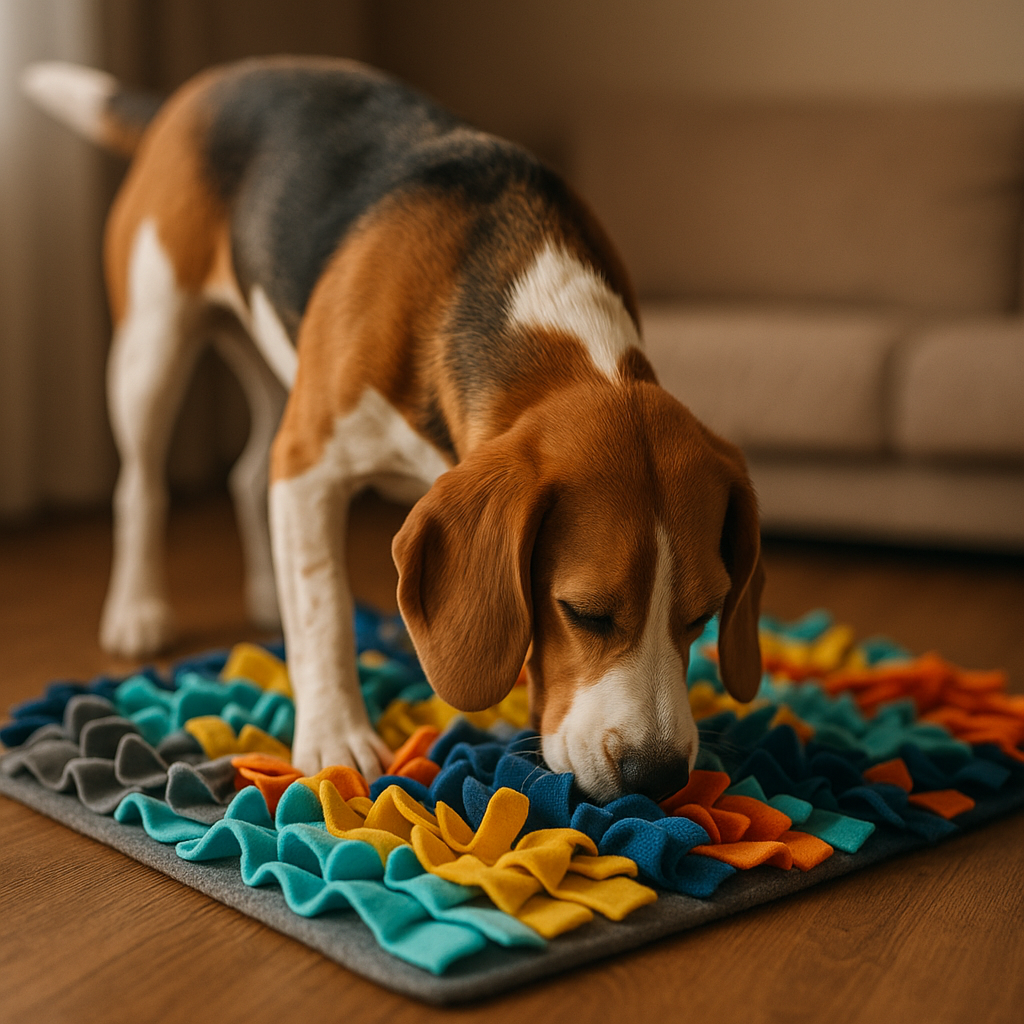
- Snuffle mats where you can hide kibble.
3. Positive Education and Regular Routines
The golden rule: consistency between promises and rewards. A hunting dog learns quickly if you do not vary the criteria:
3.1 Basic Commands and Patience
- Sit and lie down remain essential to channel excitement.
- Stay still: indispensable during strong indoor stimuli (sounds, guests).
- Short sessions (5–7 minutes) several times a day to maintain attention.
3.2 Integrating Walks into the Routine
A morning or late-day pedestrian walk structures the dog’s day. The goal is not speed but consistency:
“A dog well-exercised in the morning stays calm all day.”
Added to this are longer outings in varied terrain to preserve coordination and satisfy the hunting instinct.
4. Mental Stimulation and Olfactory Challenges
Without hunting, the sense of smell must continue to shine. Substitute sensory activities play a key role:
4.1 Indoor Tracking Games
Hide small pieces of treats or a scented toy in different rooms. Each discovery strengthens self-confidence.
4.2 Improvised Agility Course
A few cushions, an overturned chair, or a cardboard tunnel become a mini-agility course. The idea is to keep the mind sharp and the body flexible.
| Equipment | Recommended Use |
|---|---|
| Anti-pull harness | Makes walks easier without pulling |
| Snuffle mat | Stimulates the sense of smell |
| Modular barrier | Defines the resting area |
| Puzzle feeder | Encourages intelligence and patience |
5. Practical Tips and Pitfalls to Avoid
- Avoid overstimulation: sessions that are too intense can cause stress.
- Do not leave the dog alone too long without enrichment support.
- Vary activities to avoid boredom: walk, play, rest, social contact.
- Monitor weight and physical condition: indoor adaptation does not mean sluggish sedentariness.
- Consult a behaviorist in case of significant resistance or persistent anxiety.
FAQ – Your Questions About the Transition
1. How long does it take to adapt a hunting dog to indoor life?
Each animal progresses at its own pace, but generally, it takes between 4 and 8 weeks to observe a clear improvement in indoor behavior.
2. Your dog remains hyperactive despite walks, what to do?
Increase the variety of activities: add scent and thinking games, and split walks into two parts (light cardio followed by an improvised obstacle course).
3. Can a hunting dog converted to indoor life be left alone?
Yes, provided you equip their absence with enrichment supports (plush toys, puzzle feeders) and gradually limit the duration of solitude.
4. Is special equipment needed for indoor activities?
Simple accessories are enough: sniffing mats, harness, scented toys, and a small agility structure. Creativity takes precedence over sophisticated equipment.
5. When to consult a professional?
At the slightest sign of excessive anxiety (destructive chewing, nonstop barking), calling on a dog trainer or a behaviorist will prevent the development of irreversible behaviors.