| Key Points | Details to Remember |
|---|---|
| 🐶 Origin | Australia and England, late 19th century |
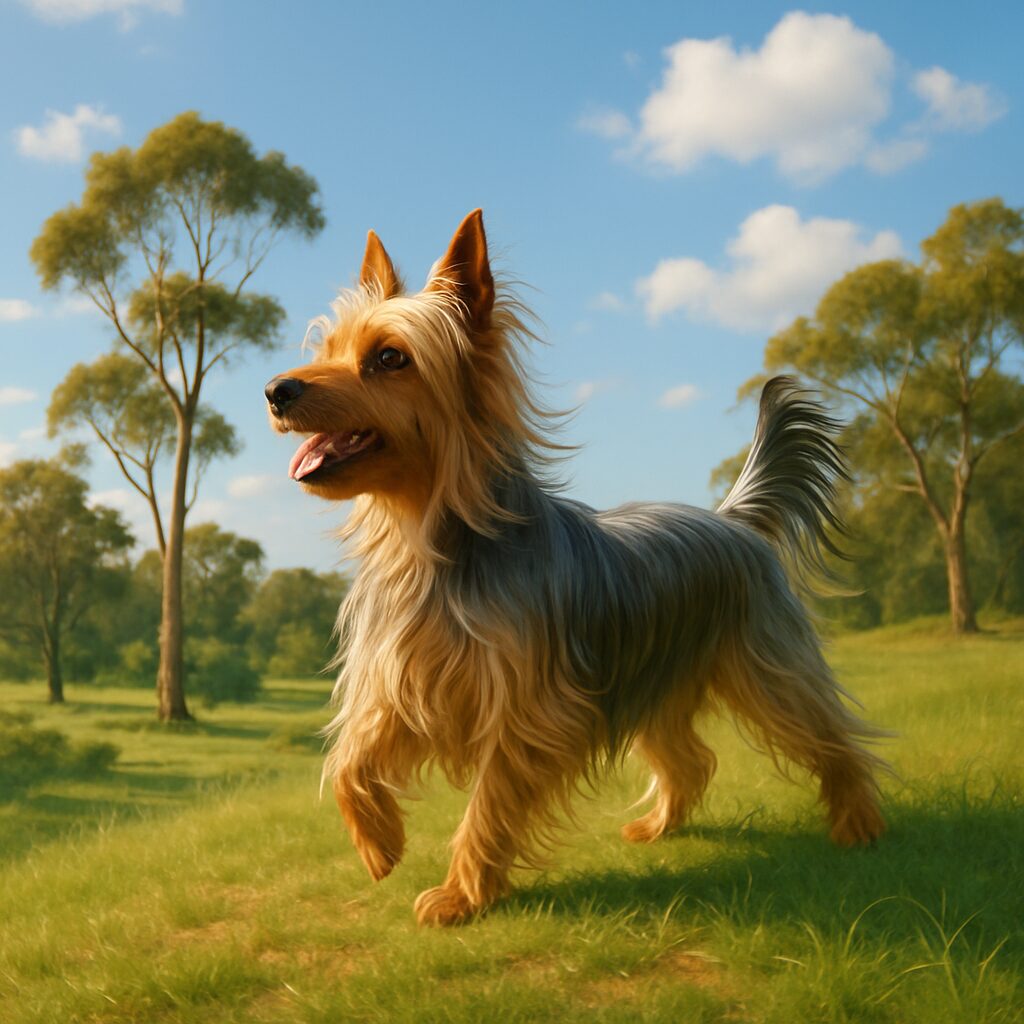
| ✂️ Morphology | Small size, slender silhouette |
| 🧵 Coat | Silky, medium-length, blue and tan color |
| ⚡ Temperament | Lively, courageous and attentive |
| 🛁 Care | Regular grooming, frequent brushing |
| 🎾 Activity | Jogging, fetch games and mental challenges |

The Silky Terrier, often nicknamed the “Australian silk,” captivates with its fine and silky coat but especially with its alert character. In this article, you will dive into its origins, explore its physical traits, understand its temperament, and discover how to care for this small dog brimming with energy.
History and Origin of the Silky Terrier
Born from a cross between the imported Yorkshire Terrier and the Australian Terrier, the Silky Terrier emerged at the turn of the 19th century. Australian breeders sought to obtain a sturdier companion than the Yorkshire, capable of hunting rodents and reptiles on farms. Quickly, this dog was exported to England where it received its official name “Silky” in reference to the silky texture of its coat.
Australian Roots
In Australia, rural life demanded a robust dog, capable of tolerating heat and dense vegetation. The Silky Terrier inherited this hardiness while maintaining a certain elegance. There, it was appreciated for its versatility: modest guard, hunting, or simple household companion.
Standard and Evolution
Over time, the standard refined the fine head and compact body, while emphasizing the long, straight, and shiny coat. In dog shows, the Silky Terrier must present an energetic gait, reflecting its inner liveliness. Modern lines favor a balance between coat beauty and sociable character.
Physical Characteristics

At first glance, the Silky Terrier charms with its presence: a short-legged body, a proud head carriage, and a coat that slips through the fingers. Despite its small size (about 23 cm at the withers), it exudes a disproportionate presence.
The Silky Coat
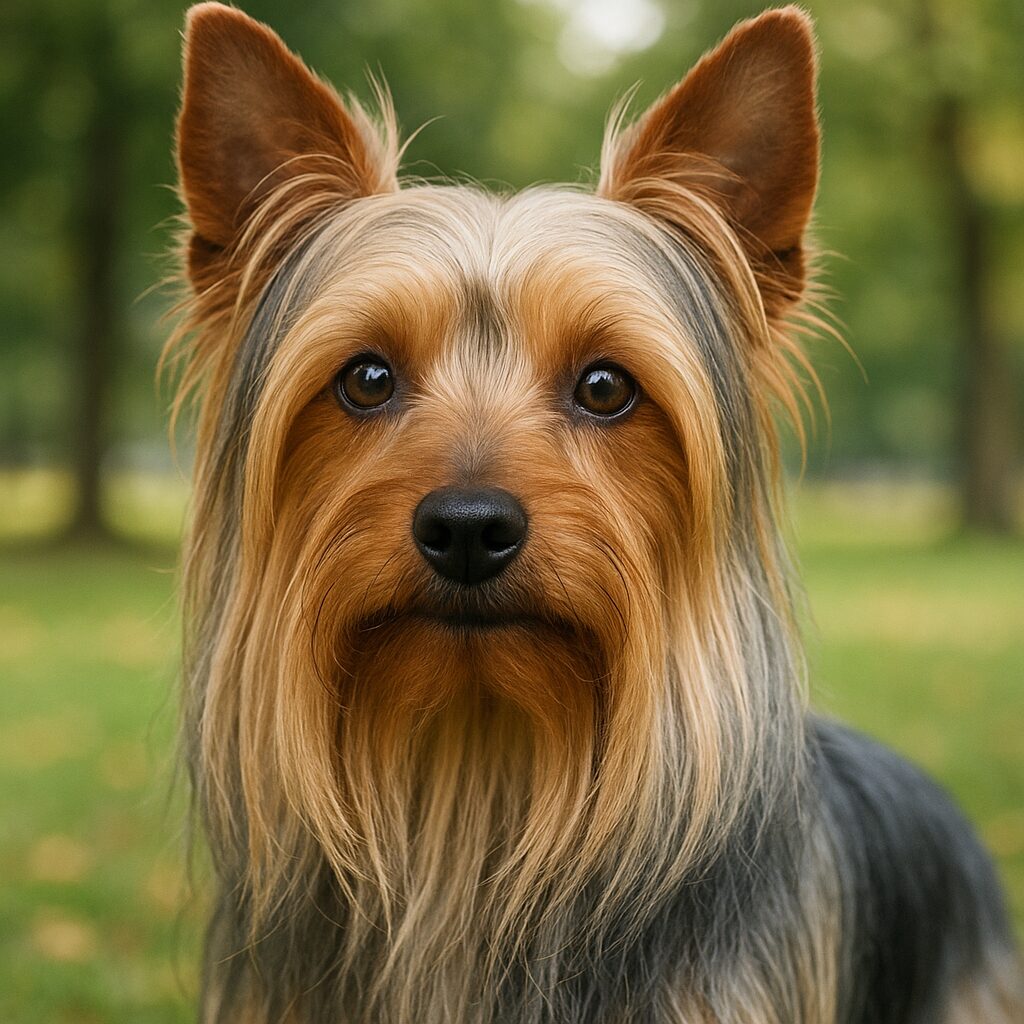
The major specificity is this medium-length coat, extremely silky and straight, which hardly forms any undercoat. It requires daily brushing to avoid knots and matting. The shades range from steel blue on the back to tan on the head, chest, and legs, offering a very pronounced contrast under the light.
Silhouette and Small Size
Compact and muscular, the Silky Terrier generally weighs between 4 and 5.5 kg. Its spine is straight, the chest moderately broad, and the front and rear limbs parallel. This conformation gives it surprising stability during frantic runs in the garden.
Temperament and Behavior
Endowed with overflowing energy, the Silky Terrier plays relentlessly and remains alert. Not for a moment does it rest on its laurels! It can be wary of strangers, a sign of a defender temperament, despite its small size.
Lively and Bold Personality
Don’t be fooled by its plush appearance: this dog has the soul of an adventurer. It is curious, seeks to explore every corner, sometimes barking to assert its presence. Its intelligence leads it to solve small puzzles if given puzzle toys.
Family Relationships
In the presence of children, it is playful and protective, as long as its rest times are respected. However, underestimating its need for activity can lead to anxiety, manifested by frequent barking or destructive behaviors.
Daily Care and Maintenance
Maintaining the Silky Terrier requires attention and regularity. You must set aside time each day for grooming, as well as anticipate its outings and mental needs.
Coat Grooming
- Daily brushing with a metal brush with spaced teeth to undo knots.
- Moderate baths, every three to four weeks, with a gentle shampoo to avoid stripping the hair fiber.
- Light trimming around the ears and paws to keep cleanliness.
Physical Activity and Mental Stimulation
In addition to two daily walks of at least 30 minutes, consider introducing obedience games, cani-cross type runs, or tracking sessions. These canine challenges channel its energy but also strengthen your bond.
Training and Socialization
Training the Silky Terrier is based on consistency and kindness. It responds better to positive reinforcement than to reprimands.
Positive Approach
Reward good behaviors with treats or verbal praise. When it understands what is expected, it shows itself rather eager. Sessions should remain short to preserve its attention.
Managing the Tendency to Agitation
“To soothe a lively mind, the rule is simple: expend its body and stimulate its brain.”
If your companion starts pacing or barking for no reason, immediately offer a toy or a small thinking session (course invention, scent hides, etc.). This will avoid the escalation of excitement.
FAQ – Frequently Asked Questions
Is the Silky Terrier suitable for urban families?
Yes, provided it is offered regular outings and interactive playtimes. In an apartment, it thrives if its exercise and stimulation needs are met.
At what age should intensive grooming begin?
From a young age, around 3–4 months, gently accustom it to brushing. This early familiarization minimizes stress and makes grooming a shared ritual.
Is the Silky Terrier compatible with other animals?
Well socialized, it can live with cats or other dogs. Its liveliness can, however, be interpreted as a challenge and trigger chases, hence the importance of gradual introductions.