
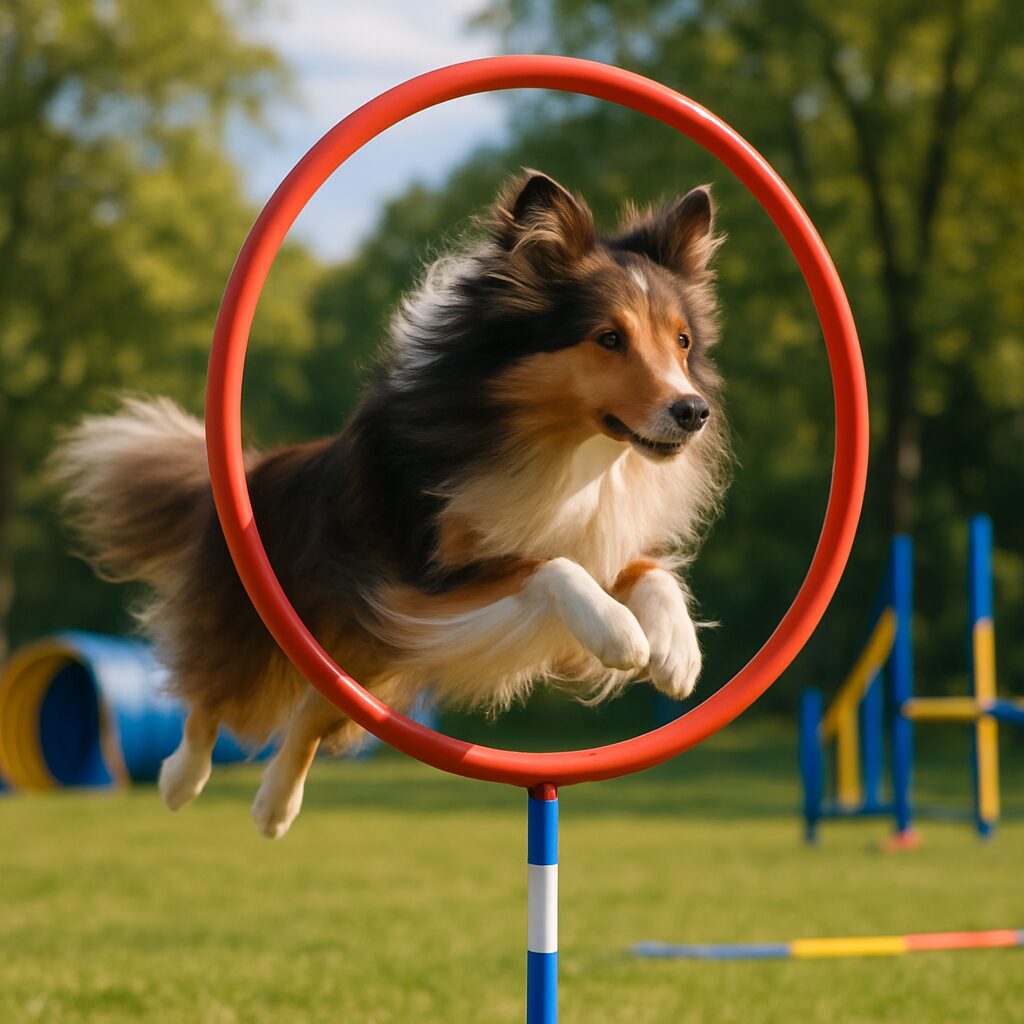
| Key points | Details to remember |
|---|---|
| 🐶 Definition | Small Scottish collie with a gentle and lively character |
| 🌟 Origins | Shetland region and Nordic influence |
| 🧠 Intelligence | Exceptional learning ability |
| 🏃 Agility | Natural agility and joy of jumping |
| ✂️ Maintenance | Regular brushing and targeted care |
| 🎓 Education | Positive method and consistency |
| ✅ Results | Versatile and enthusiastic companion |

The Shetland Sheepdog, often nicknamed the “mini-collie,” fascinates as much by its slender silhouette as by its outstanding intelligence. Beneath its gentle appearance lies a lively dog, built for agility challenges, capable of combining speed and precision. This article unfolds the history, temperament, and training practices that make this British breed a companion as elegant as it is effective on an obstacle course.
Origins and characteristics of the Shetland Sheepdog
A small British collie
Born in the Shetland archipelago, north of Scotland, this herding dog was selected for its versatility in harsh climates and rugged terrain. According to records, collies imported from Great Britain were crossed with Nordic breeds, shaping a robust and enduring mammal. Originally, its task was to gather sheep over kilometers, while withstanding gusts of wind and steep slopes.
Build and coat
The Shetland Sheepdog measures between 33 and 40 cm at the withers, generally weighing between 6 and 12 kg. Its fine head, extended by a straight muzzle and semi-erect ears, gives it an alert expression. The fur consists of a dense undercoat and a long, thick outer coat, often tricolor (sable, white, and black) or bicolor (blue merle). This double layer protects against the cold while revealing a majestic tail carriage.
Intelligence and temperament

A natural curiosity
The Sheltie stands out for an impressive learning ability: it quickly grasps commands and gets excited by every exercise. One might think such liveliness would make training complex, but in reality, the challenge stimulates its desire to cooperate. Its sharp mind thrives on solving canine puzzles, where it uses both memory and observational skills.
Socialization and daily life
Its balanced character between docility and energy allows it to adapt to family life as well as competitions. Thanks to a lively temperament, it finds real pleasure in interactive games and running. Whether in a house or an apartment, regular outings are necessary to channel this curiosity and avoid boredom, a potential source of destructive behaviors.
Shetland Sheepdog in agility
Physical assets
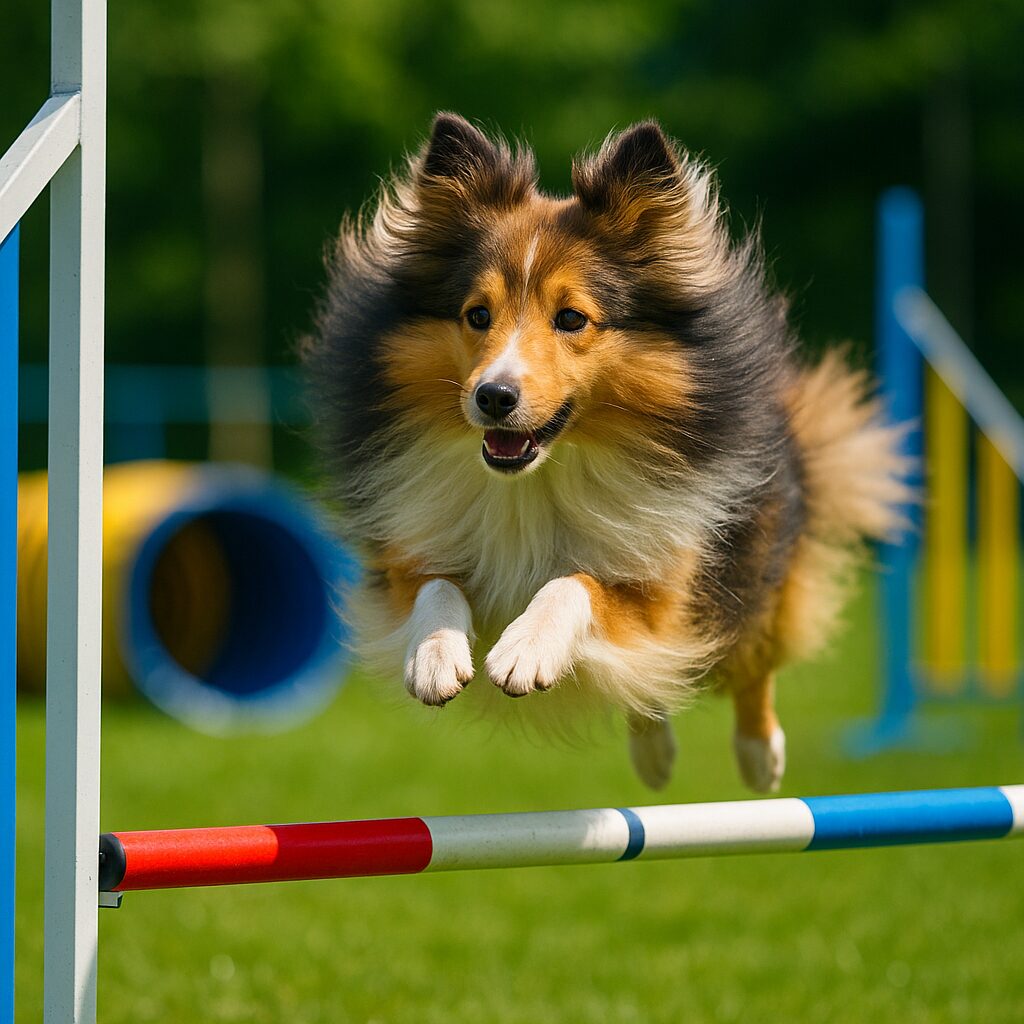
Endowed with a light bone structure and toned muscles, the Sheltie launches itself with great fluidity. Its well-designed joint angles allow for fast trajectories and effortless elevation changes. Its powerful hind legs provide remarkable propulsion, while its slightly curved tail serves as a balance to adjust its trajectory. These natural assets enable it to excel on hurdles, tunnels, and slaloms.
Training and Methods
To effectively guide the Sheltie in agility, a non-coercive approach based on positive reinforcement is adopted. Rewards, whether treats or praise, associate each move with pleasure. A step-by-step progression facilitates understanding: starting with low hurdles, then gradually introducing complexity (serpentines, walkways, etc.). Short sessions, paced with recovery phases, prevent breathlessness and maintain motivation.
Care and Education
Brushing and Maintenance
Its dense coat requires brushing at least twice a week to avoid knot formation and parasite proliferation. In winter, a wide-toothed comb clears the undercoat, while a soft brush enhances the outer coat. This is complemented by regular checks of ears, nails, and teeth to prevent infections and discomfort.
- Ear checks every week
- Nail trimming as soon as they touch the ground
- Weekly dental cleaning
- Light bath once or twice a year
Prevention of Health Problems
Although generally robust, the Sheltie may have hereditary predispositions to patellar luxation or certain forms of dysplasia. Early screening, combined with adapted exercises, limits risks. You will also ensure maintaining an ideal weight, guaranteeing optimal longevity and good joint support.
Choosing Your Shetland Sheepdog Puppy
Selecting a Breeder
A responsible breeder provides health and behavior guarantees: genetic tests, lineage tracking, and early socialization. During the visit, observe the living environment, cleanliness of the premises, and the adults’ attitude. A well-socialized puppy, accustomed to everyday noises, will be calmer when integrating into your home.
Preparing for Arrival
Before welcoming the puppy, set up its resting area (basket, blanket), organize the feeding place, and delimit a secure space for the first steps. The first days are crucial to laying the foundations of trust: prioritize gentleness, regular outing times, and a gradual introduction to the leash.
Testimonials and Feedback
A Winning Duo
Several agility handlers testify to a close bond with their Sheltie: “In competition, non-verbal communication becomes almost telepathic,” says Claire, passionate for ten years. Every change of direction is understood with a slight hand gesture, every jump synchronizes with a look.
“My Sheltie taught me patience and perseverance: every new course is a challenge we take on paw in hand.”
Sharing the Journey
On social networks, agility clubs abound with anecdotes where the Sheltie surprises with its boldness: inverted tunnels, tight slaloms, or high-speed orientation grabs. These successes reinforce the idea of a faithful companion, equally suited for family life and competition.
FAQ
- What age to start agility?
- It generally starts between 12 and 18 months, once the skeleton is mature, to reduce joint risks.
- Does the Shetland Sheepdog bark a lot?
- Certainly, it has a developed guarding instinct: training to manage barking is therefore essential.
- Can it live in an apartment?
- Yes, provided that stimulating outings and daily intelligence games compensate.
- What diet to favor?
- A balanced diet, rich in protein and adapted to its activity level, with regular veterinary follow-up.
- How often should it be brushed?
- At least twice a week, more during shedding periods to avoid knots.