
| Key Points | Details to Remember |
|---|---|
| 🐶 Definition | Shepherd and fisherman dog, originating from Spain |
| 📜 Origins | Rural regions of Andalusia and Castile |
| 🌀 Coat | Tight curls and special grooming |
| ⚒️ Character | Hardworking spirit, lively and protective |
| 🏋️ Exercise | Varied activities to channel its energy |
| ✂️ Grooming | Regular clipping and curl care |

The Spanish Water Dog first catches the eye with its untamable curls, then charms with its intelligence and inexhaustible energy. Among Spanish breeds, it remains quite rare, but its versatility – from herding to swimming – makes it valuable both for the breeder and the family that adopts it. Through this article, we explore its history, physical characteristics, hardworking temperament, as well as the keys to making it a balanced companion.
Origins and Evolution of the Breed
The earliest traces of the Spanish Water Dog date back to the Middle Ages, when shepherds from the Andalusian plateaus used this sturdy dog to watch over sheep and retrieve fish. Unlike other standardized breeds, there were several local lines – sometimes smaller, sometimes very stocky – adapted to rugged terrains or rivers. This proximity of agro-pastoral activities and fishing shaped a versatile, enduring dog capable of swimming with ease.
In the 20th century, the breed nearly disappeared due to the modernization of agriculture. Enthusiasts then collected the remaining specimens from remote farms before launching the first official standard in 1988. Since then, its popularity has slowly grown, notably in France and Nordic countries, where it is recognized for remarkable aptitude in canine sports and great resistance to cold.
Morphology and Characteristic Coat

A Balanced Silhouette
The Spanish Water Dog has a compact build: height ranges from 40 to 50 cm at the withers, with a weight generally between 16 and 25 kg. The lines are straight, the back is straight without being stiff, and the chest remains moderately broad, allowing good range of motion. Its legs, both sturdy and agile, testify to its working dog past. The body is neither heavy nor delicate, but gains both strength and suppleness.
The Curly Coat, Signature of the Breed
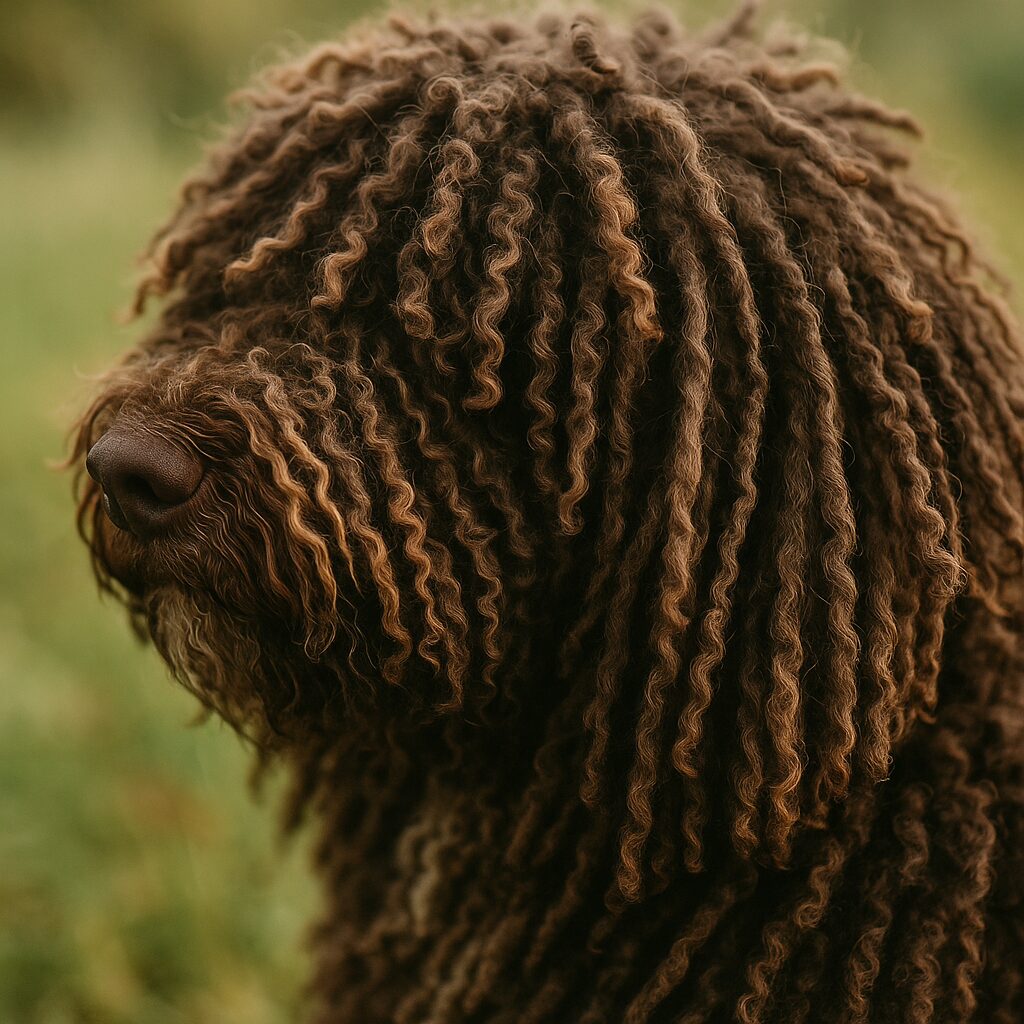
Emblematic appearance, the coat forms tight locks, almost like cords, which form irregular curls from the neck to the base of the tail. Depending on the lighting, these curls may appear matte or slightly shiny. Accepted colors range from solid white to solid black, including brown, roan, or gray, sometimes spotted. Unlike poodle hair, these curls are firmer and better resist brambles, a quality appreciated in rural environments.
Temperament and Abilities
One might be mistaken in thinking they have a simple companion dog; in reality, the Spanish Water Dog remains above all a working dog, designed to follow a herd or participate in aquatic activities. Endowed with great intelligence, it quickly detects what is expected of it and willingly submits to discipline, provided that it is consistent and respectful.
Herding Instinct and Vigilance
In its role as a shepherd, it is focused, capable of fixing a sheep with a gaze and leading the herd at the desired pace. Even in an urban environment, this vigilance persists: any stranger or abnormal movement arouses its curiosity, even a small alert sound. However, it is not needlessly aggressive: it analyzes rather than attacks. Early socialization training is crucial for it to find its place without tipping into excessive mistrust.
A Passion for Water
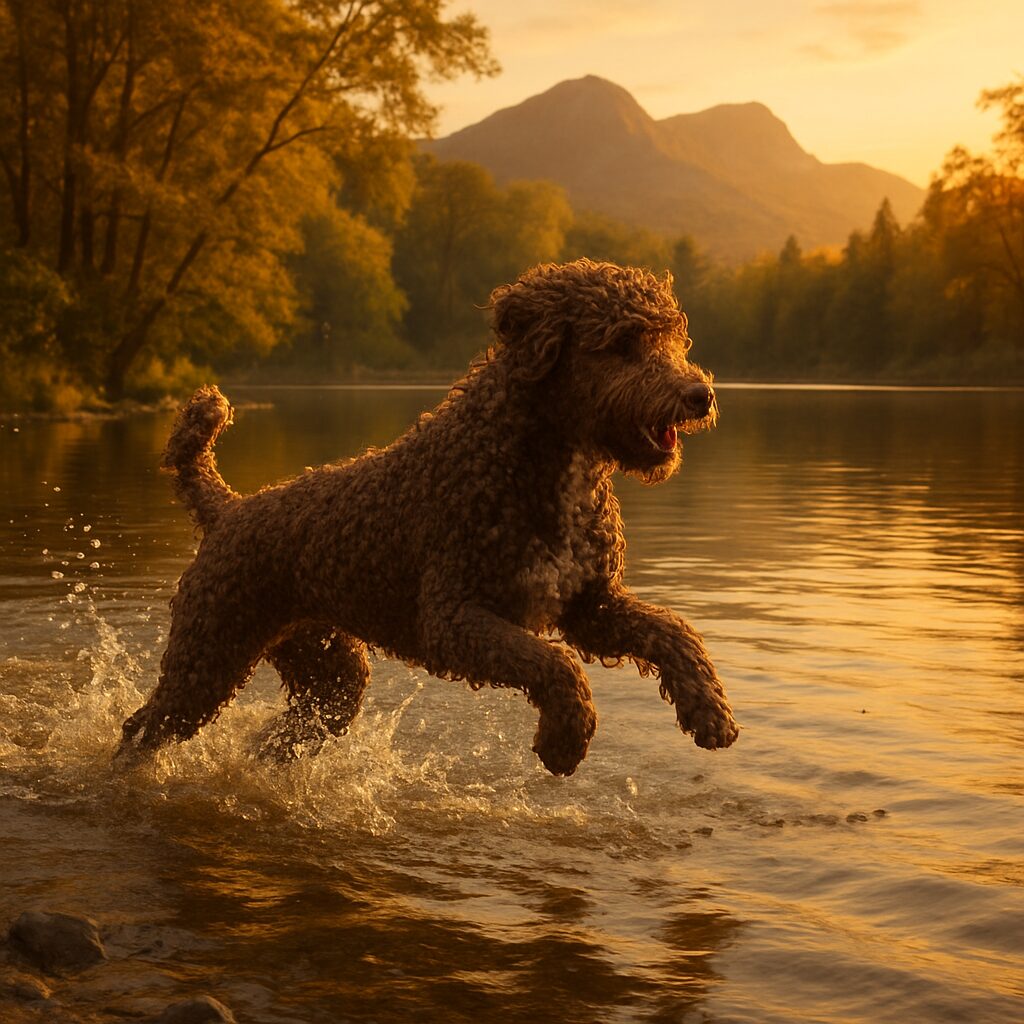
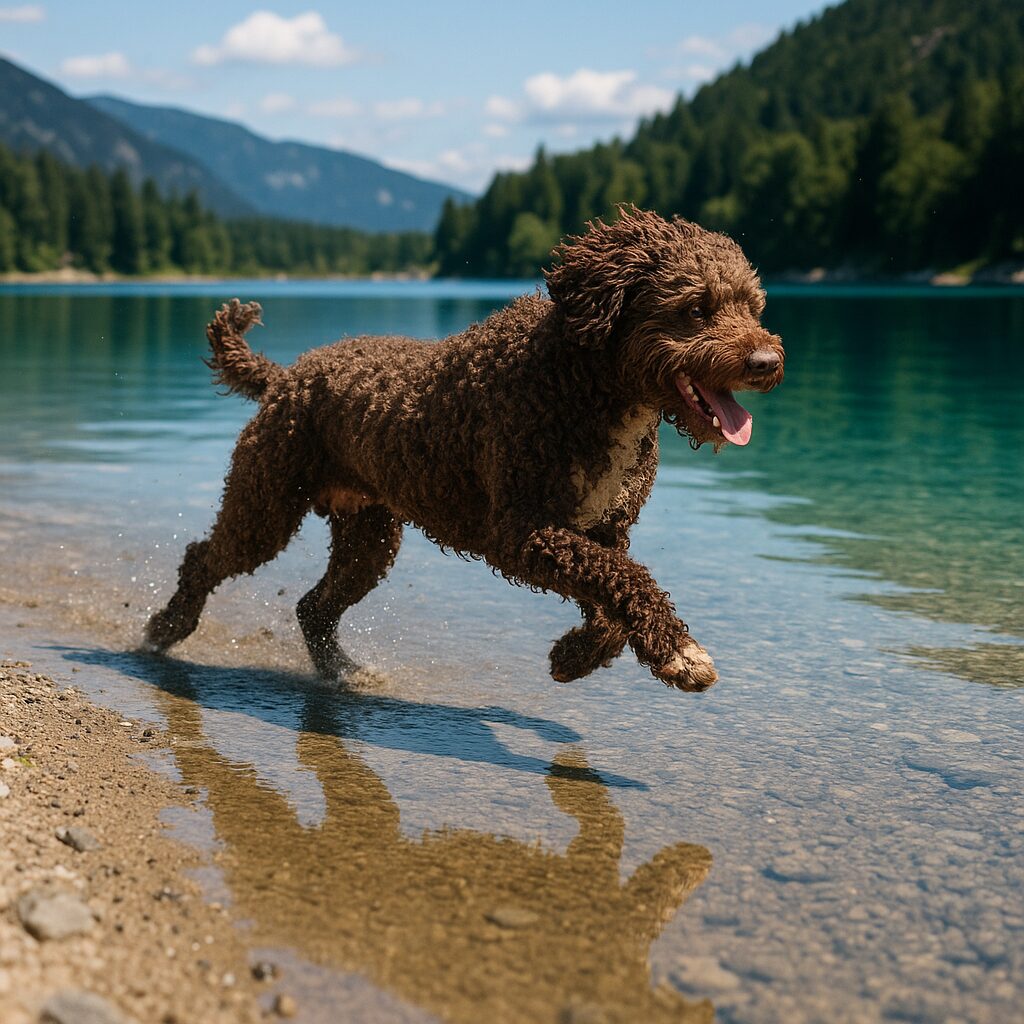
Originally, Spanish fishermen used it to haul nets and retrieve fish in coves and rivers. Even today, it excels in aquatic search trials. Water stimulates it; it adopts a smooth and powerful swim. To keep it mentally calm, plan regular swimming sessions, especially in the summer or if it does not tolerate heat well.
Training and Exercise Needs
The Spanish Water Dog cannot stand boredom: a sedentary dog becomes nervous, may develop destructive behaviors, or bark without reason. The ideal is to combine physical exercise and mental stimulation.
- Daily walks: at least one hour, on varied terrain.
- Aquatic exercises: swimming, retrieving floating objects, ideal in summer.
- Canine sports: agility, flyball, canicross to maintain complicity and fitness.
- Intelligence games: food puzzles, hide and seek with objects.
Ideally, reserve a fenced area where it can run off-leash. To reinforce obedience, favor positive reinforcement: praise, small treats, and games when it performs the exercise without hesitation. Violent methods risk causing anxiety and damaging its long-term cooperation.
Grooming and Health
Grooming Adapted to Curls
The specificity of its coat requires different care than a smooth-coated dog. Its curls are not brushed; they are manually separated to avoid knots and dirty areas. Once or twice a month, check the strands around the armpits and groin. As for clipping, it is ideally done twice a year, often in spring and autumn, to maintain a length of 3 to 5 cm, sufficient to protect the skin and limit overheating.
Medical Monitoring
Generally robust, the Spanish Water Dog can nevertheless have some predispositions: hip dysplasia, hypothyroidism, and eye disorders such as progressive retinal atrophy. Annual visits to a veterinarian, combined with orthopedic follow-up for athletes, allow early detection of any abnormalities. Maintaining regular physical activity and an appropriate weight is the best defense against many health issues.
Choosing and Welcoming a Spanish Water Dog
Before taking the plunge, ask yourself about your lifestyle: are you ready to incorporate several hours of activities per day? Do you have a garden or frequent access to a body of water? If the answer is yes, you can start by meeting several recognized breeders, visiting litters, and talking with experienced owners to assess the temperament of each puppy.
- Awakening afternoon: participate in group sessions with the puppy to judge its interaction.
- Visit the home with the breeder: check if the environment is suitable, without dangerous areas.
- Purchase conditions: ensure veterinary follow-up, the sales contract, and health guarantee.
Once the puppy is home, apply a stable routine: same meal times, calm walks in the morning, playtime in the afternoon, and accessible resting areas. This helps it feel secure and channel its energy positively.
FAQ about the Spanish Water Dog
- Is the Spanish Water Dog suitable for children?
- Yes, its playful and protective nature makes it an excellent play companion, provided interactions are supervised and younger children are taught to respect its space.
- Is a special permit required to own this breed?
- No, it is a non-categorized breed; French legislation does not require any special authorization.
- How to prevent its coat from smelling bad?
- Rinsing with clear water after swimming and careful drying often suffice. Avoid too frequent shampoos, which dry out the skin.
- Can the Spanish Water Dog live in an apartment?
- Theoretically yes, if compensated by 2 to 3 long daily outings and intense play sessions.
- What is its life expectancy?
- On average between 12 and 14 years, depending on activity and quality of veterinary care.