
| Key Points | Details to Remember |
|---|---|
| 🐶 Definition | Small herding dog originating from Sweden |
| 🏰 Origin | Viking roots and rural traditions |
| 💪 Character | Energetic, curious and determined |
| 🎓 Training | Demanding but rewarding |
| 🏃 Activity | High need for exercise and stimulation |
| 🩺 Health | Robust but to be monitored for hips |

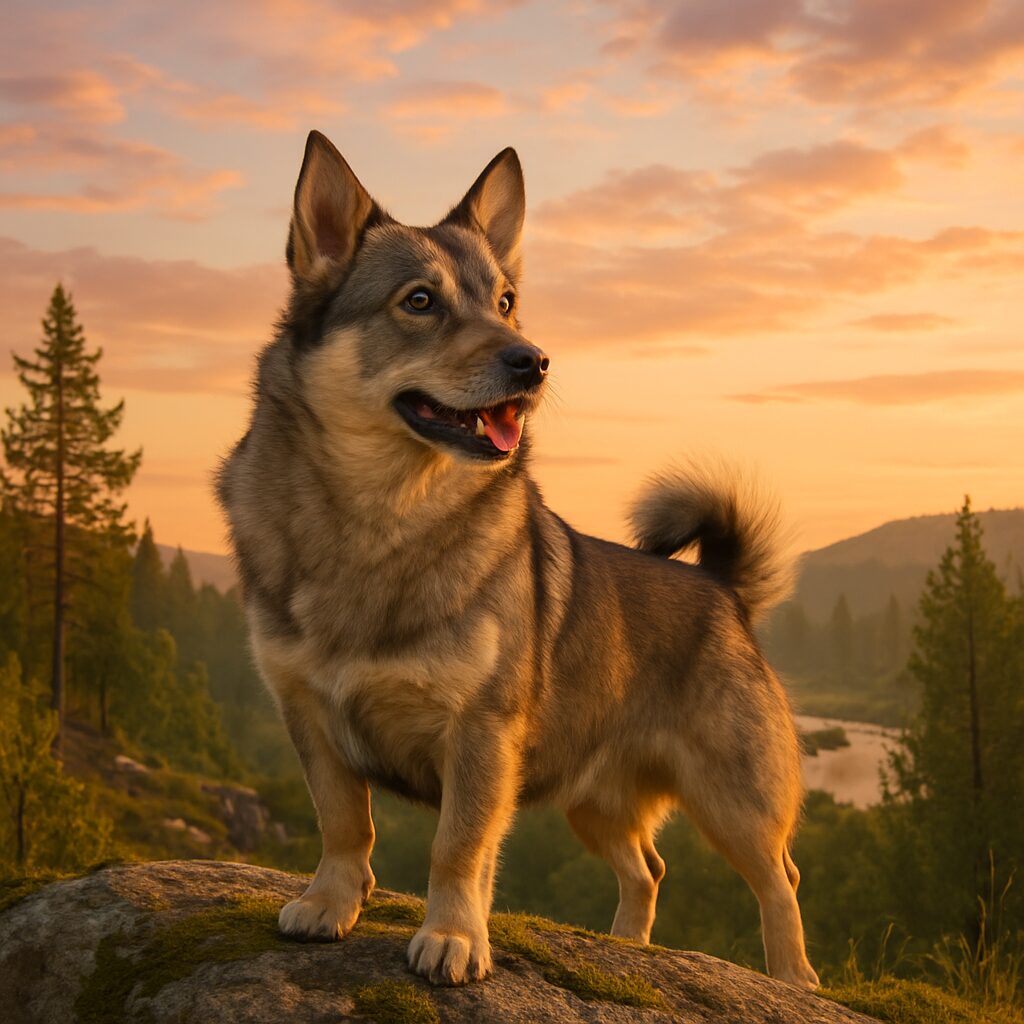
At first glance, the Swedish Vallhund evokes a compact silhouette, erect ears, and a mischievous glance: a Viking corgi captivated by the herding spirit. Yet behind its Nordic warrior looks hides a sensitive companion, gifted with sharp intelligence and unparalleled devotion. In this article, we trace the origins of this breed, detail its strengths and requirements, and share advice and anecdotes for those wishing to welcome a Vallhund into their life.
History and Origins of the Swedish Vallhund
Viking Roots
At the heart of Scandinavian history, this small herding dog lived alongside farms and monasteries since the Viking era. Some oral tales place its ancestors on the Baltic islands, where it guided flocks of rams and guarded the boundaries of estates. Its small stature is not a sign of weakness but of versatility: capable of chasing sheep along steep slopes, it took advantage of its low center of gravity and remarkable endurance.
From Farm to Show
For centuries, the Swedish Vallhund lived in the anonymity of Swedish farms, ignored by cynological registries. It was only at the beginning of the 20th century that enthusiasts brought it out of the shadows. In 1943, the breed was officially recognized by the Swedish kennel, then quickly exported to England and the United States. In the rings, its liveliness and rustic appearance charmed judges and breeders, securing this “everyday life dog” an international reputation.
Physical Characteristics

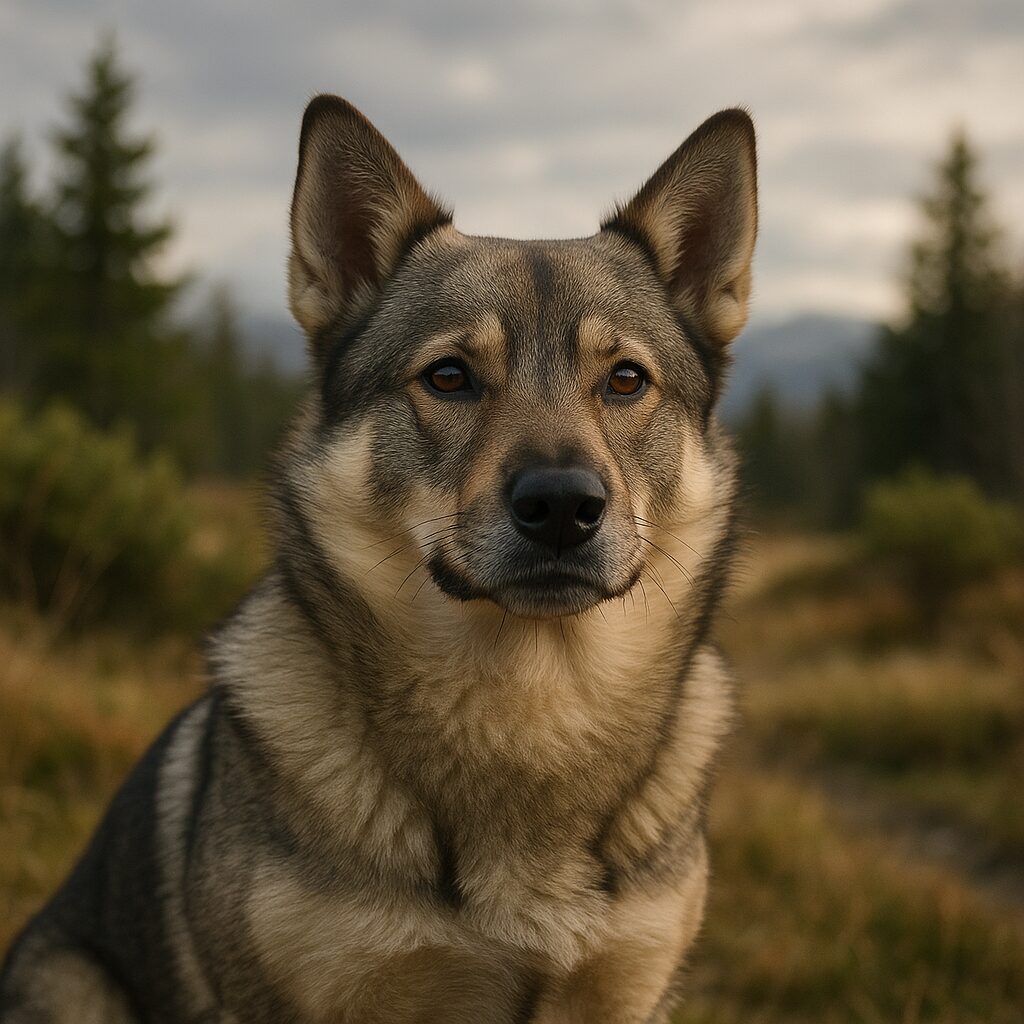
With its 25 to 32 cm at the withers for an average weight of 9 to 14 kg, the Vallhund combines robustness and agility. Every detail of its morphology serves a function:
- Solid chest offers good respiratory capacity during long runs.
- Short limbs ensure stability and speed on uneven terrain.
- Expressive head with almond-shaped eyes, reflects its attentive temperament.
- Naturally short tail (or carried high in a scarf) recalls its lineage with primitive Nordic dogs.
Coat and Undercoat
Red, gray-brown, brindle or salmon: the coat shades are varied but always protected by a dense, waterproof, and insulating undercoat. It is thanks to this double coat that the Vallhund endures cold temperatures or sudden showers without flinching, an essential asset for a dog raised outdoors.
Temperament and Sociability
On the psychological level, the Swedish Vallhund is defined by two key notions: loyalty and curiosity. It forms an almost unwavering fidelity to its home, whether it is a small house by the sea or a suburban detached house. But do not be fooled by its size: couch life is not its strong suit.
Herding dog above all
The hereditary herding instincts manifest themselves by a tendency to gather everything that moves: family members, unexpected visitors, bicycles, or scooters. Without regular stimulation, these impulses can become intrusive (chasing, barking). Incorporating recall exercises and tracking games effectively channels this energy.
Compatibility with other animals
In a house where cats and small rodents coexist, initial vigilance is necessary. However, well socialized from a young age, the Vallhund learns to coexist peacefully. Progressive discovery sessions, combined with rewards, promote tolerance and limit reflex hunting reactions.
Training and activity needs
Approaching the education of a Swedish Vallhund means accepting a compromise between gentle firmness and inventiveness. Its intellectual liveliness pushes it to decode each situation: it does not blindly follow an order but evaluates it.
- Learning through play: agility finishing touches or tracking workshops highlight its intelligence and offer it an outlet.
- Positive reinforcement: fond of rewards and attention, it thrives with a patient owner, focused on encouragement rather than reprimand.
- Variety of stimuli: alternating walks in wooded areas, frisbee sessions, and mini obstacle courses delays boredom and preserves motivation.
Example of a weekly routine
Monday: light jogging accompanied. Tuesday: tracking games in the garden. Wednesday: walk rich in olfactory discoveries. Thursday: agility session at the club. Friday: afternoon of rest and petting. Saturday: endurance hike. Sunday: swimming or urban exploration. This alternation guarantees a calm dog comfortable in its paws.
Health and care
Overall robust, the Swedish Vallhund can reach 15 years without trouble, provided a few recommendations are followed:
- Monitoring hips and back: a preventive X-ray at 2 years detects dysplasias or misalignments.
- Minimal grooming: weekly brushing is enough, intensified during the two annual molts.
- Dental care: regular brushing or chewing dental sticks to prevent tartar and gingivitis.
- Weight control: adapted menus and fractioned food ration avoid overload.
Pathologies to know
| Problem | Prevention & follow-up |
|---|---|
| Hip dysplasia | Early X-ray, regular exercises, and adapted surfaces |
| Eye conditions | Annual ophthalmologic check-up |
| Obesity | Weight monitoring and nutritional balance |
The Vallhund in everyday life
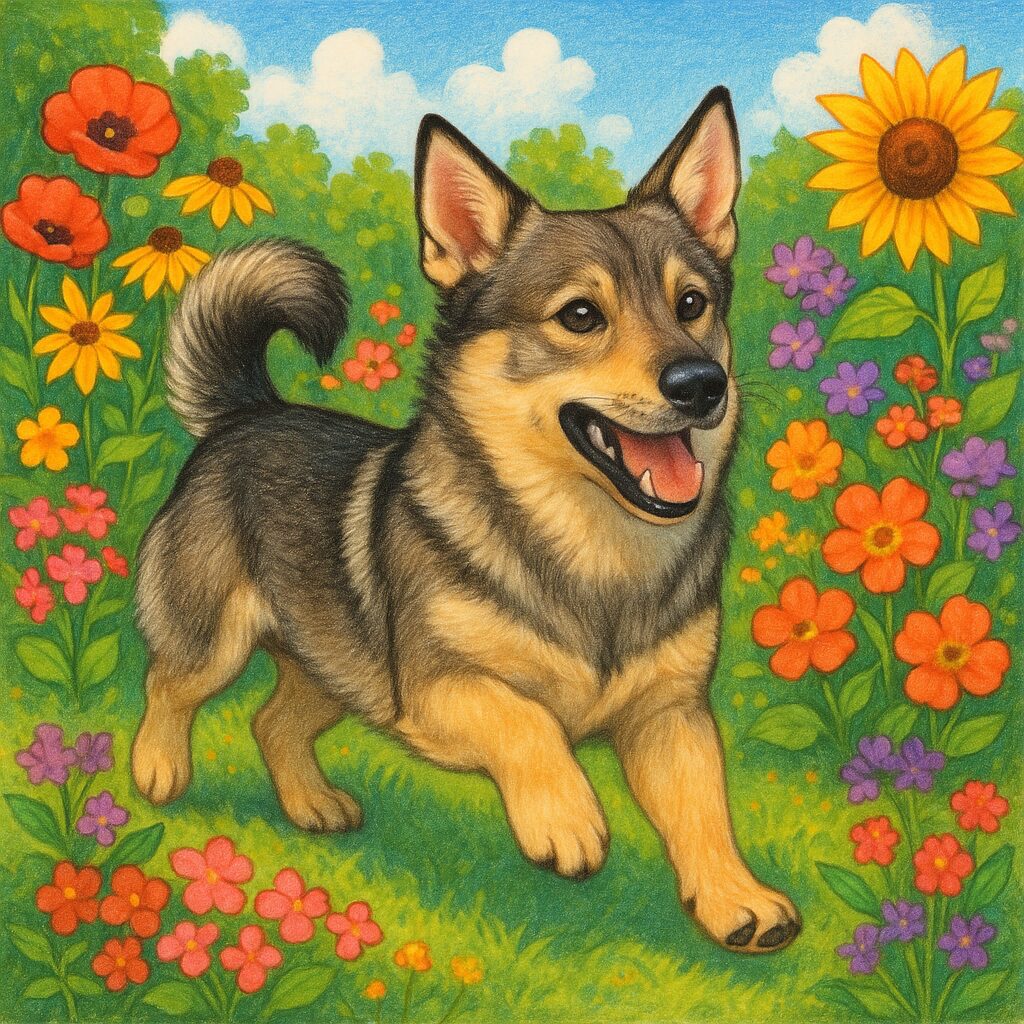
Adopting a Swedish Vallhund means accepting an active and often surprising companion. From one moment to the next, it can launch into a frenzied run to catch a leaf, or accompany you with a confident step during a forest getaway. In the family sphere, its role as an affectionate guardian is manifested by an increased sensitivity to the emotions of those around it: sadness, stress, or excitement, it reacts with rare empathy.
Adaptation to Urban or Rural Rhythm
In urban areas, daily outings should be enriched with interactive indoor games or dog parks. In the countryside, often a field or a meadow is enough for it to unleash its potential. The essential thing is to respect its thirst for discovery and not to curb its herding instincts.
FAQ
- What age can a Swedish Vallhund reach?
On average, between 13 and 15 years, with good hygiene of life. - Is it suitable for children?
Very playful, it generally gets along well with children old enough to respect its space. - Can it live in an apartment?
Yes, provided that outings and stimulating activities are multiplied. - Does it easily approach other dogs?
Social from a very young age, it can remain compassionate provided it learns nuance in play. - What kind of diet should be favored?
Premium kibble adapted to its activity level, divided into two daily meals.