
| Key Points | Details to Remember |
|---|---|
| 🐾 Definition | Robust sled dog originating from the Arctic, built for power and endurance. |
| ❄️ Main Benefits | Sustained pulling over long distances, ability to work in extreme cold. |
| ⚙️ Functioning | Body structure optimized for energy efficiency and heat retention. |
| 🏋️ Training | Structured progression focused on endurance, socialization, and terrain adaptation. |
| 🥣 Nutrition | High-calorie ration, protein and fats adapted to prolonged exertion. |
| 🧰 Equipment | Specific harness, booties, resting blanket, and reliable attachment system. |

The sight of a team of Alaskan Malamutes moving across a snowy plain may seem unchanging: masses of fur, lungs breathing in the icy air, an almost mechanical pace. In reality, behind this apparent simplicity lie centuries of adaptation, a precise body architecture, and training demands often misunderstood. This article explores why the Alaskan Malamute remains a benchmark for expeditions in cold environments, how to prepare and equip it, and what practical limits to keep in mind when planning a polar raid.
Origins and Historical Role
The ancestor of the Alaskan Malamute accompanied the indigenous populations of Alaska and subarctic Canada as a versatile partner: pulling heavy loads, transporting supplies, and providing a reassuring presence for camps. Unlike sprint racing dogs, such as the Siberian Husky, the Malamute was selected for strength and resilience. This human selection shaped not only its appearance — a broad build, dense bone structure, a double coat — but also behavioral traits: relative calmness in the team, strong sociability towards the group, and an ability to sustain effort over long days.
Morphology and Functional Characteristics
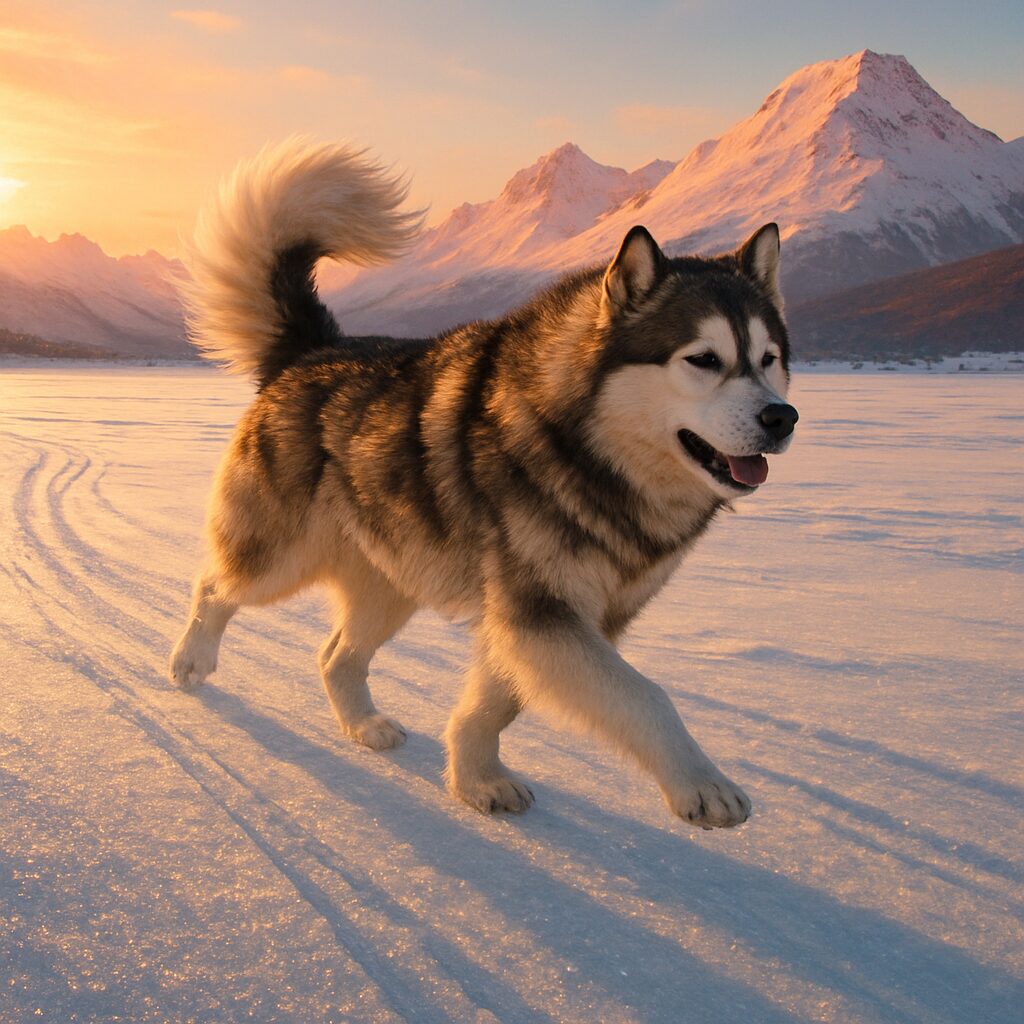
The Malamute’s silhouette responds to mechanical imperatives. A deep chest allows room for large lungs; muscular shoulders and sturdy limbs transmit power; the tail carried in a sickle shape serves as a balancer on uneven terrain and as an insulating scarf at rest. Its double coat — dense undercoat and longer guard hair — offers remarkable insulation against wind and moisture, but requires regular maintenance to prevent matting and monitor the skin.
Table: Measurements and Physical Benchmarks
| Attribute | Typical Reference |
|---|---|
| Height at withers | 61–71 cm (males), 56–66 cm (females) |
| Weight | 34–45 kg (males), 32–38 kg (females) |
| Coat type | Double coat: dense undercoat and waterproof guard hair |
| Gait | Rhythmic, energy-efficient over long distances |
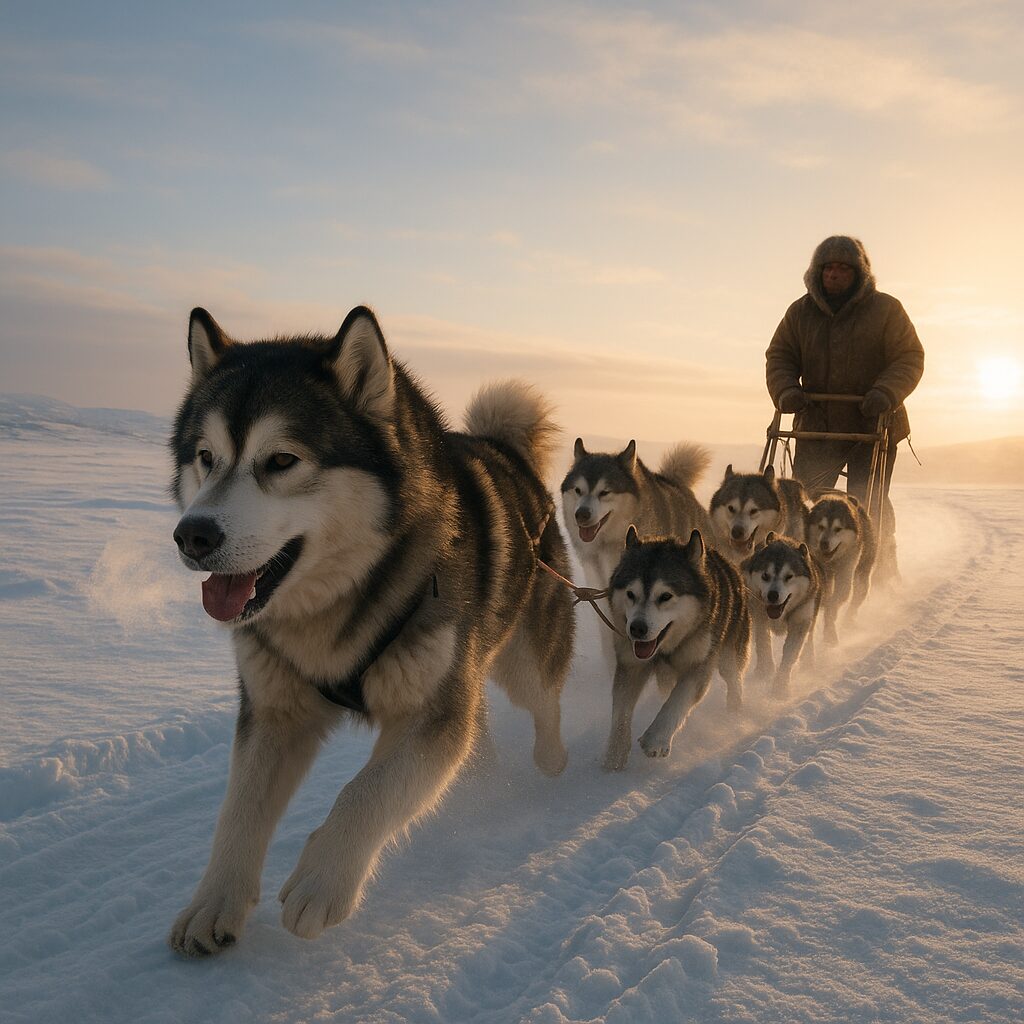
Visually, a Malamute in action does not necessarily resemble the cliché of a hyperactive dog. Its gait favors consistency: long but measured strides, regular breathing. On long and deserted routes like those found above the polar circle, this consistency makes the difference between finishing the day in shelter or managing an emergency.
Temperament and behavior on expedition
In the field, the Alaskan Malamute combines strong independence — a legacy of pack life — and marked loyalty towards its human companions. You will see dogs capable of obeying simple commands and taking on responsibilities in the sled team, while sometimes making local decisions: choosing a path, assessing a slippery surface. It is this judgment ability that makes them excellent partners for experienced teams, but which poses a problem for beginner handlers if the team hierarchy is not clearly established.
Interaction with the crew
- Non-verbal communication: posture, moderate vocalizations, limited eye contact during effort.
- Compatibility with other breeds: generally good, but watch out for resource-related tensions at camp.
- Stress resistance: better than in lighter breeds, but socialization remains crucial to reduce anxiety in new situations.
Training and preparation before departure
Preparing a Malamute for an expedition is not about sending it out on a few outings and then considering the matter settled. The basis consists of progressively building the workload — distance, pulled weight, frequency — while alternating rest and recovery. Muscle strengthening sessions (climbs, varied terrains), cardiovascular training (long walks at a steady pace), and simulation exercises (crossing ice, uphill pulling) make up a coherent program. Integrating socialization and obedience times strengthens the dog’s ability to stay on task despite fatigue.
Typical 12-week plan
- Weeks 1–4: base strengthening (walking, swimming if possible, recall training)
- Weeks 5–8: progressive introduction of pulling, light loads, camp simulation
- Weeks 9–12: loads close to mission, full team work, night tests
Equipment, safety, and logistics
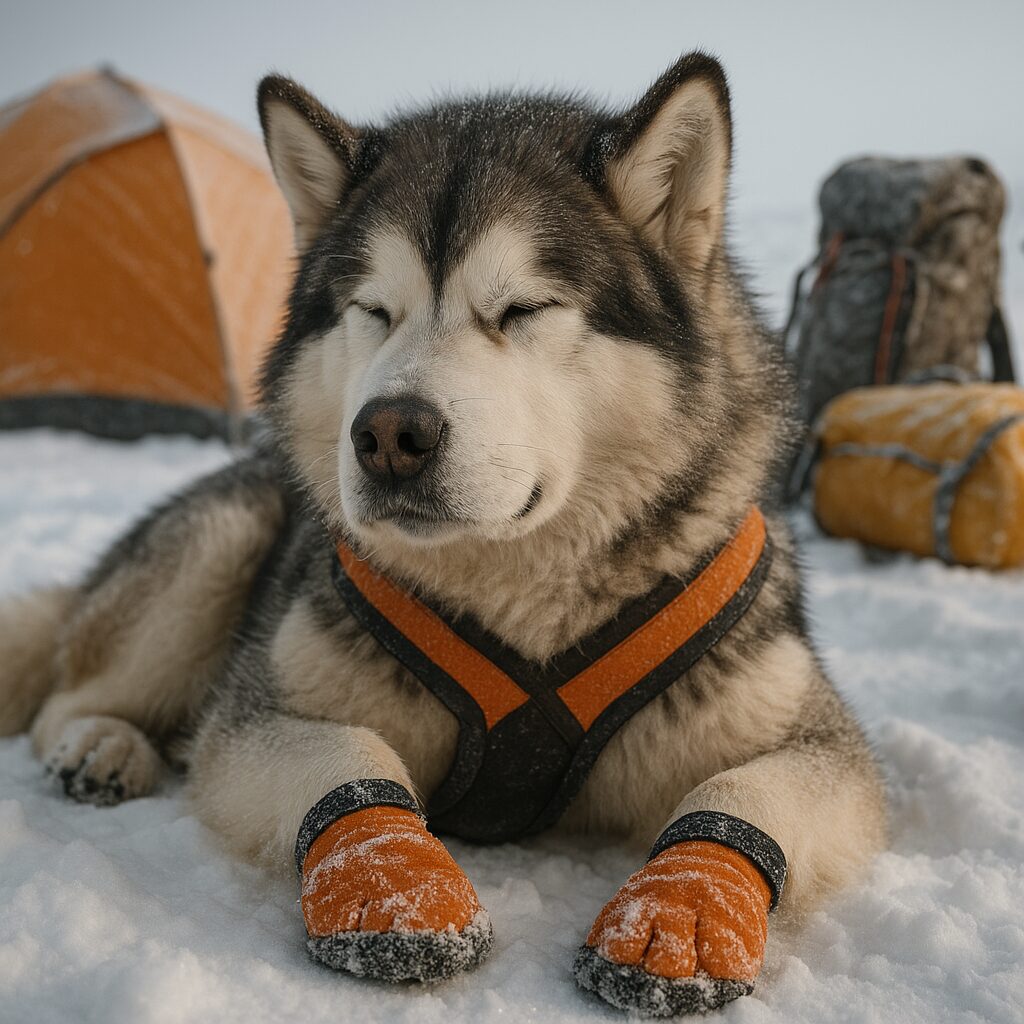
Choosing the right equipment extends a Malamute’s service life and reduces the risk of accidents. The harness must distribute the load over the chest without rubbing the shoulders; booties protect the pads against sharp ice but require an acclimation phase to prevent the dog from removing them. The attachments must have a controlled breakaway system in case of snagging, and the sled anchor points require materials resistant to abrasion from cold and ice.
| Item | Function |
|---|---|
| Specific harness | Distribute traction and preserve the shoulders |
| Booties | Protect the pads and prevent frostbite |
| Rest blanket | Retain heat during long stops |
| Attachment system | Allow a quick and safe release in case of incident |
Health, Nutrition and Recovery
In cold zones, the Malamute’s metabolism runs at full speed. Its caloric needs increase significantly with the intensity of the effort and the outside temperature. A daily ration for a sled dog can exceed its resting needs by 50 to 100%; emphasis must be placed on quality proteins and easily assimilable energy-rich lipids. Hydration is often underestimated: a dehydrated dog quickly loses its thermoregulation capacity and muscle performance. After exertion, recovery involves fractionated feeding, gentle stretching, and regular checks of the paws, eyes, and ears to detect signs of abrasion or infection.
Warning Signs
- Persistent limping after rest
- Loss of appetite and apathy
- Visible frostbite on pads, ears or tail
- Abnormal breathing after moderate effort
Comparison with Other Sled Dogs
Compared to the Siberian Husky, the Alaskan Malamute offers more power and more autonomy, but generally less speed over short distances. The Greenland dog remains even heavier and adapted to extreme carrying, while the husky excels in races. Your choice will therefore depend on the mission profile: for transporting heavy loads and endurance, opt for the Malamute; for fast and agile relays, other breeds will be more effective.
Practical Advice for Handlers and Expedition Leaders
Plan, test, repeat: these verbs summarize the necessary pragmatic approach. Before any outing, carry out a complete inventory of care equipment (dressings, antiseptic, collars), establish rotations in the team to spare older dogs, and plan regular rest points. Note that human experience is as decisive as canine preparation: a attentive team leader anticipates signs of fatigue and adjusts the pace to avoid collective overwork.
FAQ — Frequently Asked Questions
Does the Malamute tolerate heat well?
No, not particularly. Its double coat protects it from the cold but reduces its ability to dissipate heat; in temperate or warm conditions, you must provide shade, fresh water, and reduce physical effort.
Can a Malamute be used for sled dog competition?
Yes, but by choosing appropriate events. Its strength makes it preferable for weight and endurance categories rather than sprints. Individual selection also matters: some Malamutes show greater speed or better tolerance to intense efforts.
What is the optimal age to start traction training?
A progressive load is favored after bone growth ends, generally between 12 and 18 months, with light loads and under veterinary supervision if necessary.
How to prevent frostbite?
Monitor extremities (ears, pads, tail), use suitable booties and avoid prolonged stops without shelter. Local protection and gradual warming after prolonged exposure reduce risks.
Practical Summary
If you are preparing an icy expedition, choosing an Alaskan Malamute involves accepting certain constraints: high caloric needs, methodical training, and specific equipment. In return, you get a powerful partner capable of pulling heavy loads over long distances and resisting extreme conditions. The success of a mission relies on harmony between human preparation, canine robustness, and adapted logistics.