
| Key Points | Details to Remember |
|---|---|
| 🐾 Definition | Robust and athletic molosser-type dog, originating from the United States. |
| 📏 Size & Weight | Height and weight vary depending on the lines: medium to large companion, generally muscular. |
| 😃 Temperament | Affectionate, vigilant, sometimes stubborn; requires socialization and firm boundaries. |
| 🏃 Activity Needs | Regular exercise: running, games, canine sports or daily mental work. |
| 🩺 Health | Monitor joints, skin and maintain genetic follow-up with the breeder. |
| 🏡 Adaptation | Ideal for active households; adapts less well to sedentary apartment life without outings. |

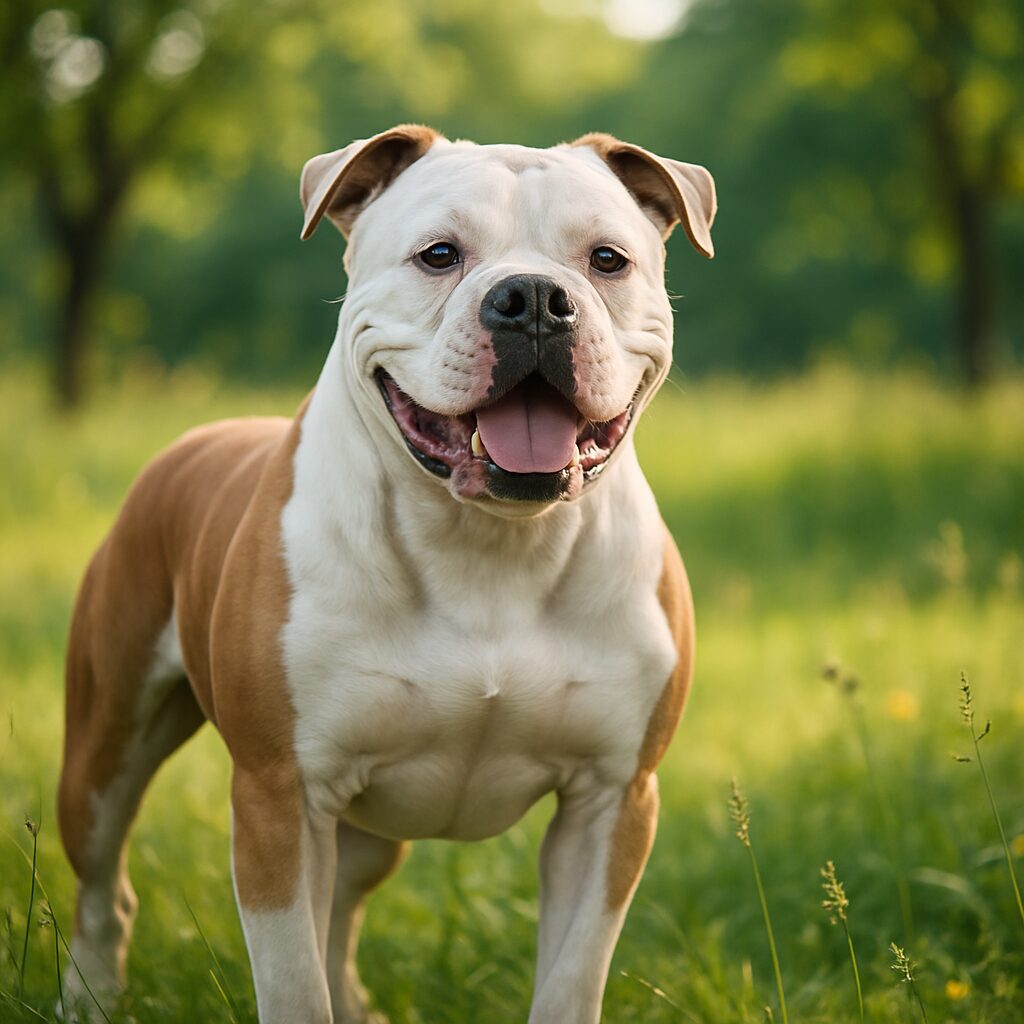
The American Bulldog immediately charms: powerful silhouette, square jaw, and what looks like a disarming smile. It’s not just a friendly face — beneath this expression lie strength, intelligence, and a great capacity for attachment. If you are considering welcoming this companion, expect a dog that demands movement, consistent training, and constant health attention. No worries: well supported, he becomes a reliable partner, playful and surprisingly gentle with his loved ones.
Origins and history in brief
The origins of the American Bulldog trace back to working dogs imported from Europe by settlers and then locally bred to meet agricultural needs: guarding, herding livestock, and sometimes fighting predators. Over generations, the breed has retained a functional physique — solid bone structure, developed muscles — and a character oriented towards cooperation with humans. Unlike some molossers bred for appearance, the American Bulldog remains rooted in a utilitarian tradition, which explains its endurance and surprising agility for its build.
Appearance and standards

General morphology
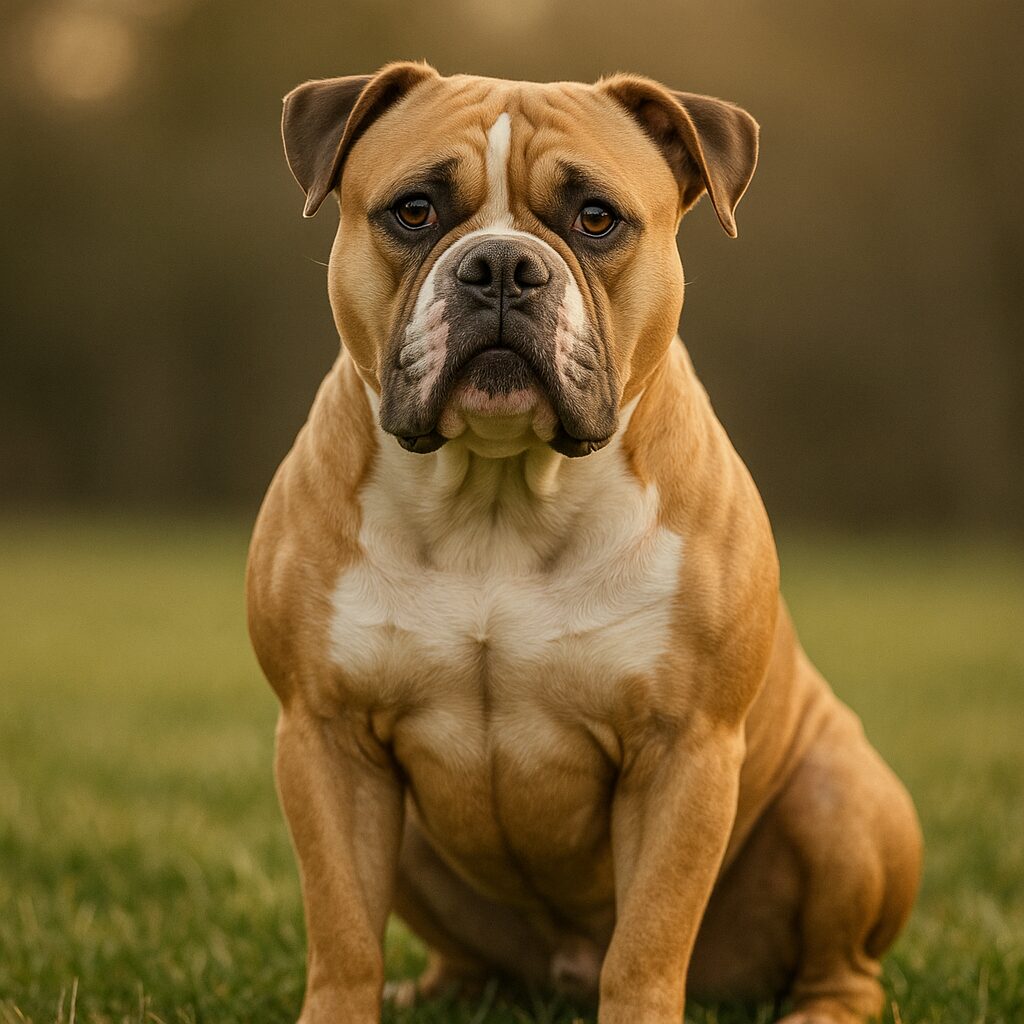
The first impression is one of controlled compactness: broad shoulders, developed chest, short and powerful back. The lines vary according to the lines — some tend towards a more massive look, others keep an athletic and fast silhouette — but the common denominator remains robustness and balance between strength and mobility. The head is broad, the cheeks pronounced, with a marked stop; the nose can be black or match the mask. The gaze, often almond-shaped, exudes energy and curiosity.
Size, weight and variations
Measurements are not uniform across all standards, but it is generally considered that the American Bulldog reaches a height at the withers approximately between 56 and 69 cm, with a weight most often between 25 and 45 kg. Males are on average more massive than females. Some working lines remain lighter and more enduring, while show lines may appear stockier.
Temperament: between tenderness and assertive temperament
One might think that stature imposes an intimidating dog; in practice, the American Bulldog combines great loyalty with sometimes explosive energy. It develops a strong attachment to its family and can be very protective, without being naturally aggressive. The key remains early socialization: exposing the puppy to people, noises, other animals, and varied situations helps achieve a calm and balanced adult. Without guidance, it risks developing dominant or fearful behaviors.
Compatibility with children and other animals
This dog often behaves exemplarily with the children in the household, combining patience and a desire to play. However, its size and exuberance require supervision: rough play can knock over a small child. Regarding other animals, many American Bulldogs coexist very well with peers and small dogs if the introduction was gradual and under firm control. Instincts vary according to the lines; caution and controlled learning are essential.
Training and recommended activities
The intelligence and willingness to please of the American Bulldog make it generally receptive to consistent training. However, its physical strength requires an owner capable of imposing clear rules without brutality. The positive method, based on rewards and varied exercises, works well. Consistency, repetition, and progressively increasing difficulty forge an attentive and willing dog.
- Socialization from the first months: meetings, sounds, regular handling.
- Basic obedience: sit, lie down, recall, leash walking — essential for safety.
- Physical and mental work: agility, tracking, moderate canicross, or search games stimulate its mind.
Scheduling effort
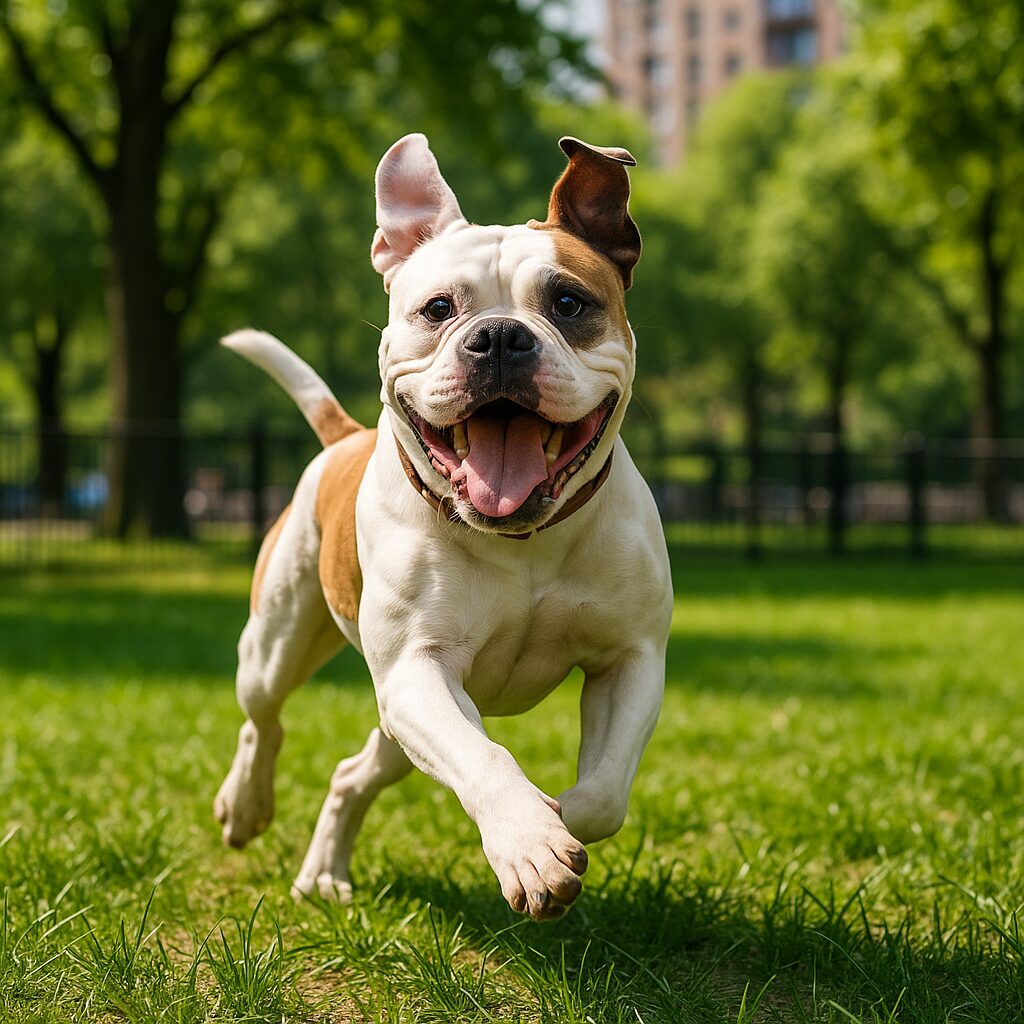
The need for activity depends on age and lineage, but plan at least one to one and a half hours of daily effort, including dynamic walks, learning games, and intellectual stimulation sessions. For a less active owner, the American Bulldog quickly gets bored and may develop destructive behaviors. Conversely, a sporty household will see it thrive fully.
Health, care, and diet
The short coat simplifies care: weekly brushing and occasional baths suffice. Nevertheless, orthopedic health and skin conditions deserve particular attention. Genetic testing and choosing a responsible breeder limit the appearance of hereditary diseases. Avoid reckless breeding; always ask for the health records of the parents regarding possible joint problems.
Common health problems
Among the most frequent concerns are hip or elbow dysplasia, sensitive in dogs with strong bone structure, as well as skin allergies related to the environment or diet. Some very white coats are correlated with an increased risk of deafness, a phenomenon to be aware of if considering a nearly albino puppy. Regular veterinary follow-up and adapted nutrition prevent many chronic complications.
Adapted Diet
Prefer a quality ration, rich in animal proteins, controlled in carbohydrates, and adjusted to physical activity. Puppies have different needs: no overfeeding that promotes too rapid growth and would put strain on the spine and joints. For adults, monitoring body weight and portions divided into two meals per day limits obesity, an aggravating factor for the joints.
Choosing a Puppy: Criteria and Questions to Ask
When looking for an American Bulldog puppy, the requirement focuses less on appearance than on health and temperament. Visit the breeder, observe the living conditions, cleanliness, and interactions between the dogs and the breeder. Ask for the results of orthopedic screenings (X-rays), available genetic tests, and proof of vaccinations and deworming. A professional breeder will also offer post-sale follow-up and clearly answer questions about the puppies’ socialization.
| Question | Why It Is Important |
|---|---|
| Health Tests of the Parents | Allow estimating the risk of hereditary diseases and avoiding risky pairings. |
| Breeding Conditions | A puppy socialized early will be less fearful and more adaptable to family life. |
| Guarantee and Advice | Indicate the seriousness of the breeder and the quality of support after adoption. |
Living with an American Bulldog: Daily Life and Practical Rules
In daily life, organization is key: a well-integrated dog has rituals — walks, games, quiet time — and rules that preserve harmony. Leash control is a key point: a strong and enthusiastic dog must learn to walk properly without pulling. The bedding, durable toys, and regular exercise sessions reduce stress. Finally, climate management is simple: the short coat requires protection in winter if you live in cold areas, while excessive heat must be monitored during intense exercise.
FAQ
1. Is the American Bulldog a good family dog?
Yes, provided early socialization, consistent training, and sufficient exercise are offered. Its loyalty makes it an excellent companion for active households.
2. How much daily exercise should be planned?
A minimum of one hour of structured activity per day is recommended: brisk walks, interactive games, and obedience or canine sport sessions depending on age.
3. Can the American Bulldog tolerate apartment living?
It can adapt to limited housing if its activity needs are met, but it thrives more in an environment offering outdoor space and frequent outings.
4. What health tests should be requested from a breeder?
Orthopedic assessments (X-rays), history of skin diseases or deafness in the lineage, and documentation on vaccinations and deworming. A responsible breeder provides this information without hesitation.
5. What is the average lifespan?
It generally ranges between 10 and 14 years, varying according to genetics, diet, and quality of veterinary care.