

| Key Points | Details to Remember |
|---|---|
| 🐾 Definition | Gentle giant descended from ancient molossers |
| 📜 Origins | Roman roots and medieval development |
| 🏋️ Morphology | High weight, massive head and solid bone structure |
| 💖 Temperament | Calm, protective and patient |
| 🛡️ Historical role | Guardian of estates and scapegoat in battles |
| 🩺 Care | Cleaning of folds, moderate exercise and adapted diet |
| 🏠 Family life | Early socialization and sufficient space |

At first glance, the English Mastiff commands respect: imposing stature, confident gait, calm gaze. This breed, often described as a “placid colossus,” combines the strength of ancient molossers with a surprising gentleness. From Victorian gardens to contemporary homes, its history unfolds over two millennia, between battles and silent watches. Shedding light on its journey, extraordinary physique, and unique character helps to understand this dog unlike any other, sometimes protective, sometimes a serene companion.
Origins and evolution
From the ancient molosser to the British mastiff
One might think the English Mastiff was born in England, but its ancestors go back to Roman molossers, themselves descended from Greek mastiffs. Imported to the island in the 1st century AD, these massive dogs accompanied legions and legionnaires, playing a role in guarding and combat. At the fall of the Empire, they survived through the ages, sometimes on the brink of extinction, then protected by the medieval nobility. Until the 18th century, controlled crossbreeding refined their bone structure without altering their defensive power.
Selection and standardization over the centuries
During the 19th century, British breeders established the first standards. Their goal: to preserve the monumental size while tempering aggressiveness. The creation of the Kennel Club in 1873 officially recognized the breed under the name Mastiff. Since then, lineages have diversified: some favor size, others robustness. Despite this rigorous standardization, each individual still carries the mark of a life of work and protection.
Imposing morphology and noble appearance

Physical characteristics
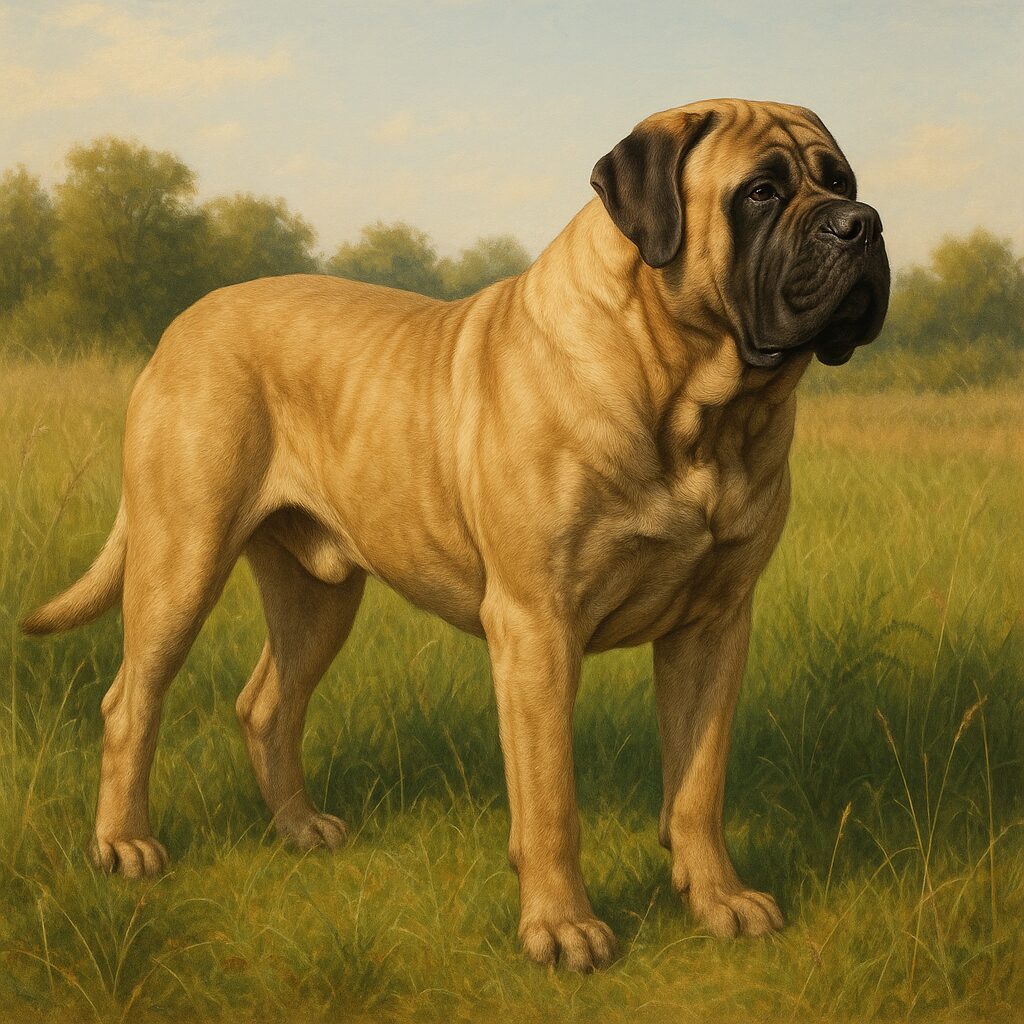
With a weight ranging from 70 to 100 kg for males, the English Mastiff is one of the heaviest dogs in the world. Its head, broad and heavy, features pronounced folds that add to its expression of vigilance. The legs remain straight, robust, ensuring stability and endurance. Coat colors vary from light fawn to brindle, often accompanied by a dark mask. Every anatomical detail evokes power, but also the ability to channel this energy.
Maintenance and Specific Care
Its wrinkled skin requires special attention: drying and cleaning the folds to prevent infections and irritations. Weekly brushing limits dead hair and prevents skin problems. Being sensitive to heat, it appreciates shade and good hydration in summer. Impossible to forget: a well-groomed Mastiff reflects a shiny coat and a toned body, guarantees of its daily health.
Temperament and Behavior
Calm Nature and Sense of Vigilance
Contrary to some clichés, the power of the Mastiff is accompanied by a calm, almost meditative behavior. A simple change in posture is enough to scare off an intruder, without incessant barking. Loyal and observant, it analyzes the situation before acting. This ability to modulate its energy is one of its most fascinating character traits.

Interaction with Children and Family
Its generous size does not prevent an almost filial gentleness with the youngest. Thanks to consistent education and socialization from childhood, it proves protective without ever being harsh. Gentle games and quiet walks strengthen this bond of trust. One then understands why so many families choose it: a companion as massive as it is balanced.
Comparison with Other Guard Dogs
In the landscape of guard dogs, some guard dogs stand out for a more distant temperament, like the Chow Chow, whose reserved attitude contrasts with the kindness of the Mastiff. More massive and sociable, the English Mastiff combines a deterrent presence with obvious kindness, making it hard to match for simultaneously playing the role of guardian and family companion.
Historical Role and Contemporary Applications
On the Battlefield and in Lordly Domains
Alongside Roman soldiers, the Mastiff’s ancestor molossus served in siege engines, frightened the enemy, and protected camps. In the Middle Ages, these colossi were deployed in castles to deter bandits. In rural estates, they guarded farms and reserves, feared as much for their size as for their determination.
Current Presence and Varied Missions
Today, the English Mastiff occupies sofas more than moats, while remaining an excellent house guardian. It is increasingly seen in animal-assisted therapy, where its patience helps soothe vulnerable audiences. Some breeders organize demonstrations to show its emotional balance, proving that strength and gentleness can flourish side by side.
Adopting an English Mastiff: Practical Advice
Choosing a Responsible Breeder
Genetic tests (Hip Dysplasia, heart diseases) are a first guarantee of seriousness. A caring breeder will present the pedigree of the litter, detail the health history, and show their facilities. By betting on transparency, you increase the chances of welcoming a balanced puppy.
Preparing Its Habitat
Despite its size, the Mastiff remains sensitive to drafts and excessive heat. A clear indoor space, an elevated bed to protect the joints, and a shaded spot in the garden are essential. Fresh water must remain accessible at all times.
Diet and Exercise
Due to its musculature, it requires an appropriate caloric intake, rich in quality proteins. To reduce the risk of gastric torsion, divide the meals and wait at least one hour after each feeding before physical activity. Daily outings, with moderate walks, are enough to keep it in shape without straining its joints.
FAQ
- What is the lifespan of an English Mastiff?
On average, 8 to 10 years, depending on care, diet, and genetics. - Is the Mastiff easy to train?
Its willingness to please facilitates learning, provided you are firm, consistent, and patient. - How to manage its growth period?
Limit jumping and intense running to protect the cartilage, especially before 18 months. - Is the Mastiff suitable for a small apartment?
The breed’s calmness allows indoor living, but it must be compensated with regular walks. - What are the signs of discomfort to watch for?
Red skin folds, limping, heat intolerance: prompt veterinary intervention is necessary.