| Key points | Details to remember |
|---|---|
| 🐶 Definition | Turkish shepherd dog specialized in surveillance |
| 🌍 Origin | Central Anatolia, cradle of millenary flocks |
| 📏 Morphology | Imposing build and dense coat to face the climate |
| 🛡️ Character | Protective, independent and vigilant |
| 🐑 Role | Flock guardian against predators and intruders |
| 🏡 Care | Regular brushing and daily outings |
| 🐕🦺 Socialization | Early to balance its temperament |

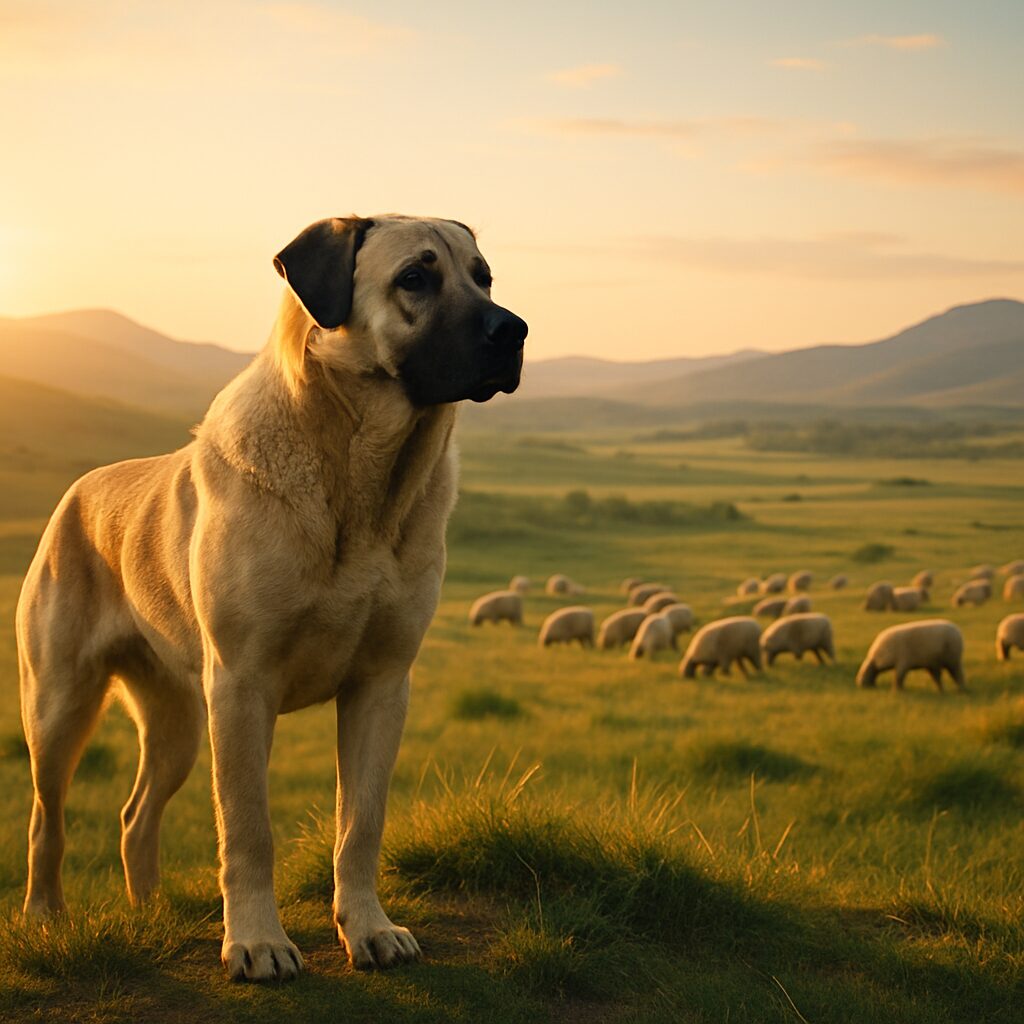
The Anatolian shepherd is often imagined as a solitary giant, motionless at dusk, scanning the horizon to protect its flock. In reality, this dog embodies millennia of adaptation to the arid regions of Asia Minor and a deeply rooted social role. More than just a guardian, it represents a loyal companion, sometimes reputed to be distant, but whose presence reassures both the shepherd and the livestock. Let’s dive together into the world of this fascinating breed, between history, physical traits, and practical advice for those wishing to welcome a true four-legged sentinel.
Origins and history
The earliest traces of the Anatolian shepherd dog date back more than 4,000 years, in the vast region of Central Anatolia, now in Turkey. Nomadic pastoral populations entrusted these molossers with the protection of their sheep and cattle against wolves, raiding caravans, and natural dangers. Through the Silk Roads, some specimens traveled to Eastern Europe, becoming over the centuries precious allies for Balkan shepherds.
In the 1960s, American breeders imported a few subjects, bringing a genetic renewal and popularizing the breed under the name Anatolian Shepherd Dog. The modern standard was established around 1975, emphasizing criteria of robustness, common sense, and independence. Today, although this dog can be found on farms in North America or Australia, its role remains unchanged: ensuring the safety of flocks against wild threats.
Morphology and physical characteristics

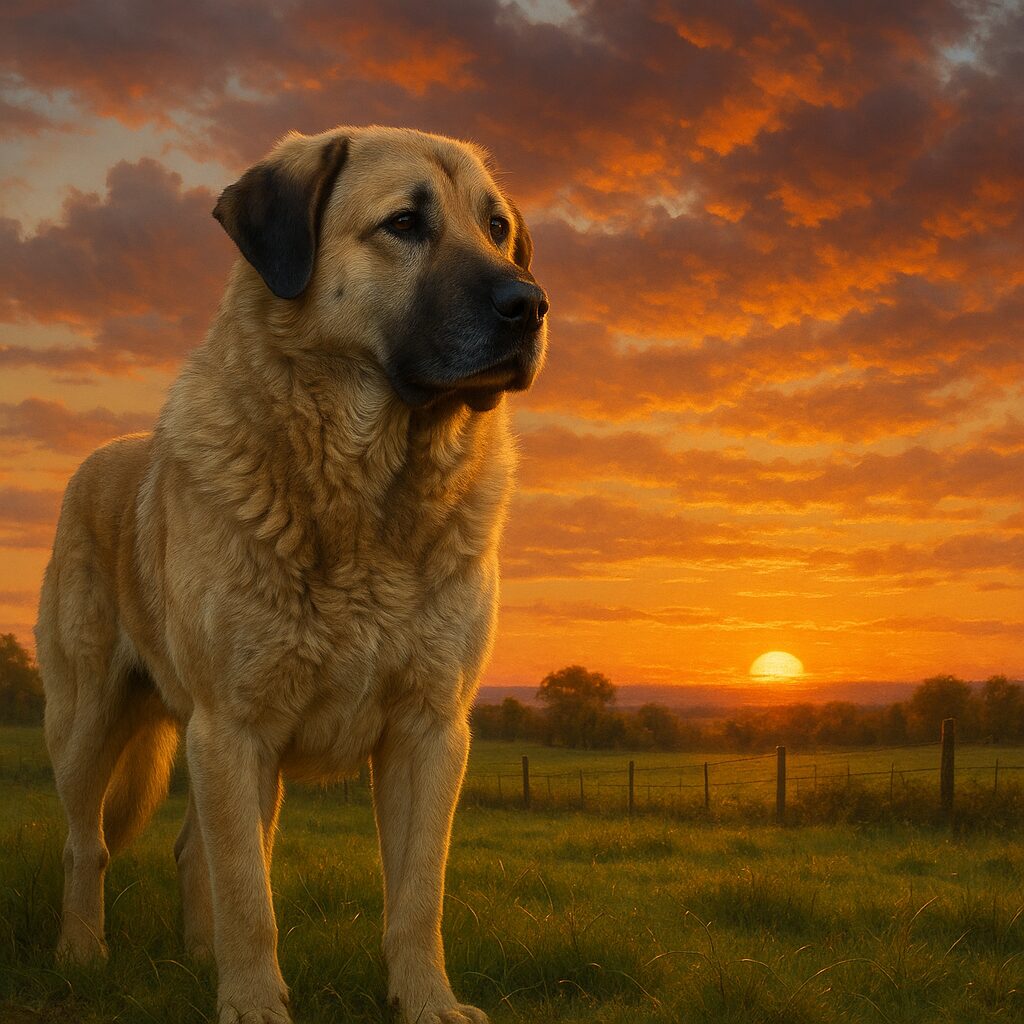
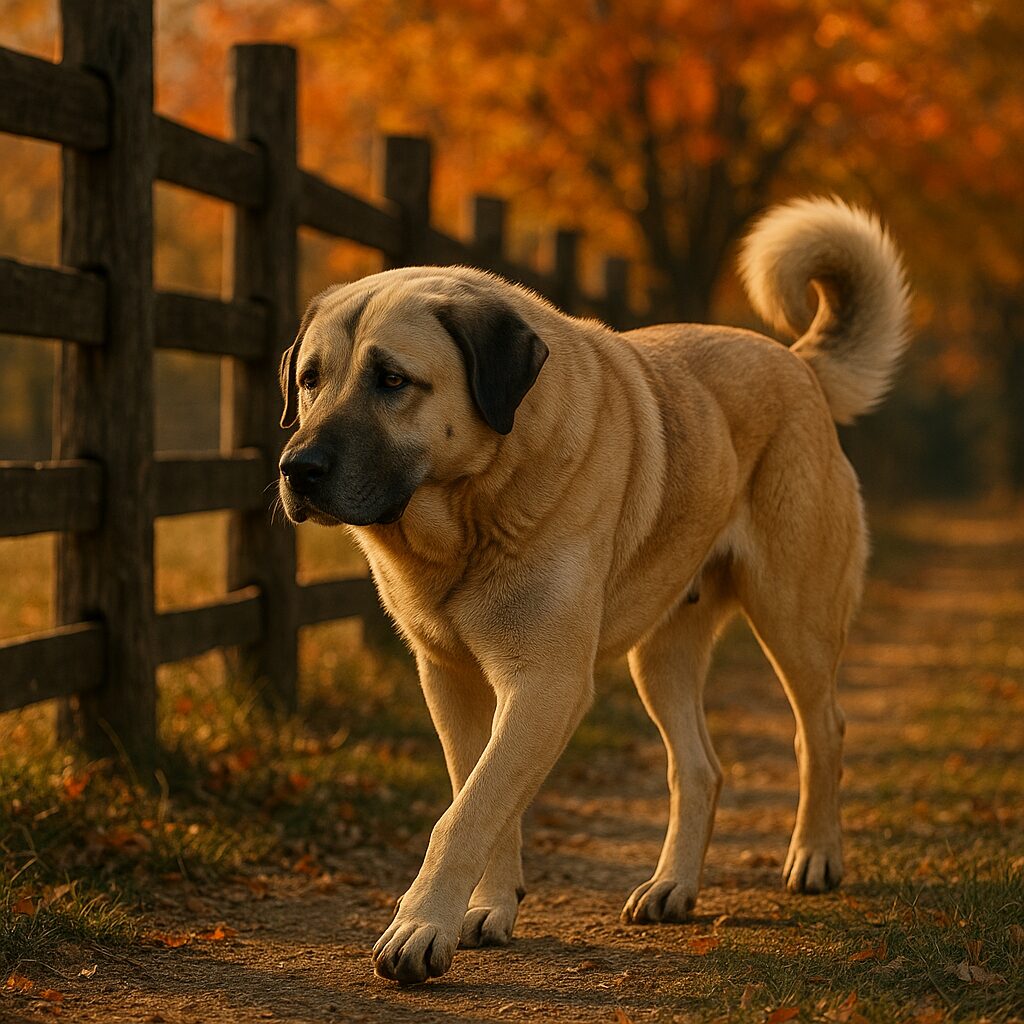
With an appearance both massive and elegant, the Anatolian seduces with its harmonious proportions. Its broad head, drooping ears, and piercing gaze betray a liveliness of spirit rarely associated with such a build. The dense double coat protects it equally well from icy evenings and scorching summers.
| Characteristic | Male | Female |
|---|---|---|
| Height at withers | 71–81 cm | 66–76 cm |
| Average weight | 45–65 kg | 40–60 kg |
| Coat color | White, fawn, brindle, sometimes masked | Same as male |
| Coat | Double, short to medium-long, resilient | Same as male |
Temperament and Behavior
He is often said to be independent, almost philosophical: he observes, judges, and only intervenes when necessary. This autonomy is accompanied by constant vigilance. The Anatolian does not sleep more than needed, ready to leap to repel an intruder. However, he does not seek confrontation; his presence is often enough to deter.
Natural Sentinel
- Alert at the slightest noise, even light creaks;
- Protection of household members without disproportionate aggression;
- Calm in the presence of familiar beings, never “hyperactive”.
At home, he reveals himself to be affectionate despite his stoic demeanor. A late stroke on his neck is enough to elicit a sigh of satisfaction. His bond with humans is built on mutual trust rather than blind obedience.
Breeding, Care, and Maintenance
Providing the appropriate comfort for this breed requires understanding its intrinsic needs. Its thick coat demands weekly brushing during calm periods and daily during shedding. A combing removes dead hair and dust, preventing knots and irritations.
Physical Exercise
- Several daily walks, including one long outing like a hike;
- Secure spaces where he can patrol freely;
- Tracking games or cognitive challenges to stimulate his intelligence.
Nutrition
His active molosser metabolism requires a balanced ration of proteins (minimum 25%), fats (15–20%), and fibers. Premium kibble formulated for large breeds is suitable, provided the quantity is adjusted according to exercise. Beware of overweight, the number one enemy of bone longevity.
Education and Socialization
Despite a predisposition to independence, a dog that is too isolated or poorly supervised may develop excessive reactions. Socialization must be done early: regular contact with other dogs, urban noises, children. Short, positive sessions are recommended, always associated with a reward, to create a trust pattern.
- Basic obedience (sit, lie down, recall) from 2 months;
- Diversified encounters to limit mistrust of the unknown;
- Dominance management: always remain firm but fair.
In adulthood, his leadership is expressed more by calm and a form of “wisdom” than by blind submission. The owner becomes a respected partner rather than an authoritarian guide.
FAQ
What age can an Anatolian shepherd reach?
Well cared for, this molosser lives between 10 and 13 years. A suitable diet and prevention of joint problems extend his longevity.
Is he compatible with apartment living?
Without a garden, cohabitation is possible if he is offered at least two daily outings of one hour and stimulating activities. His quiet nature remains an asset.
How does he react to children?
Protective, he is gentle with the youngest, provided they learn to respect his resting moments and not overly intrude on his space.
Should his guarding instinct toward strangers be feared?
Early and gradual socialization allows this instinct to be channeled. He will alert with a firm bark, then observe rather than attack without reason.