| Key Points | Details to Remember |
|---|---|
| 🐕🦺 | Ancient origins linked to Egypt and Greco-Roman hunting. |
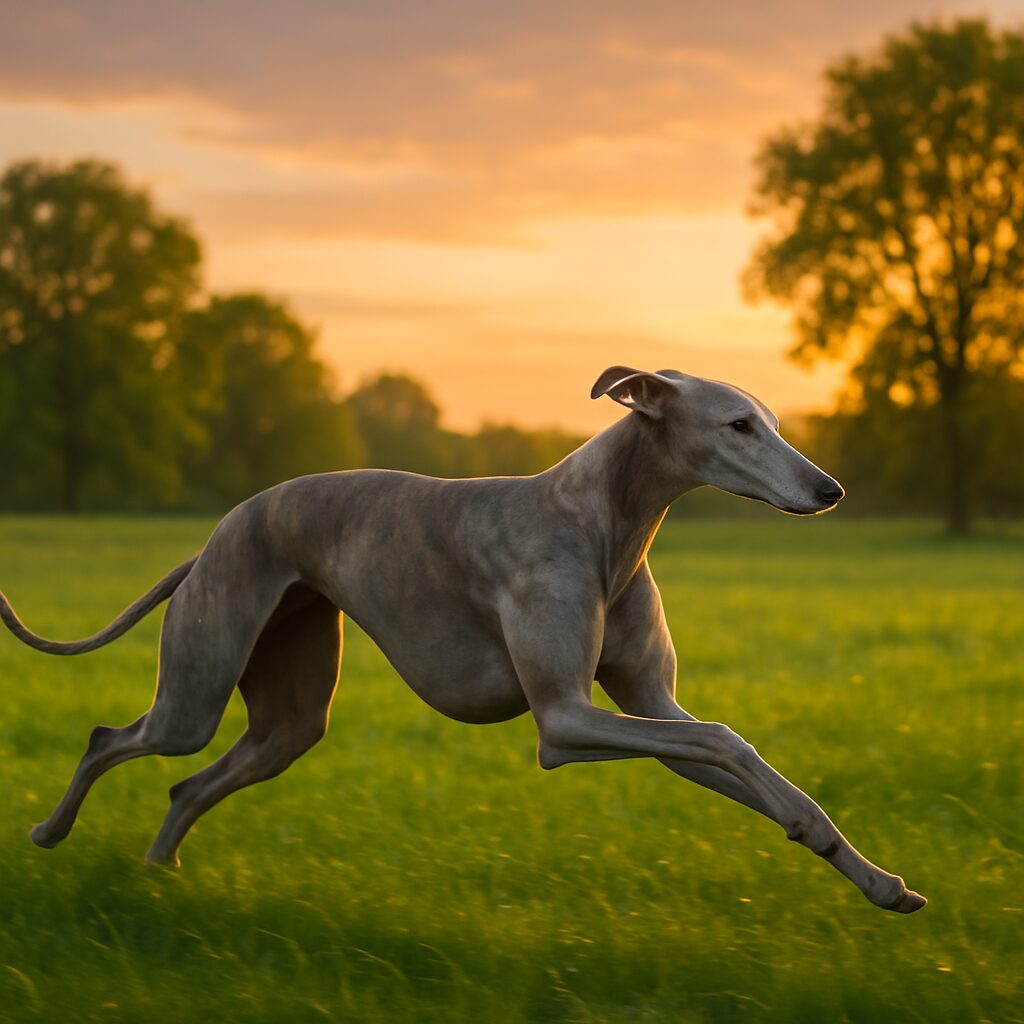
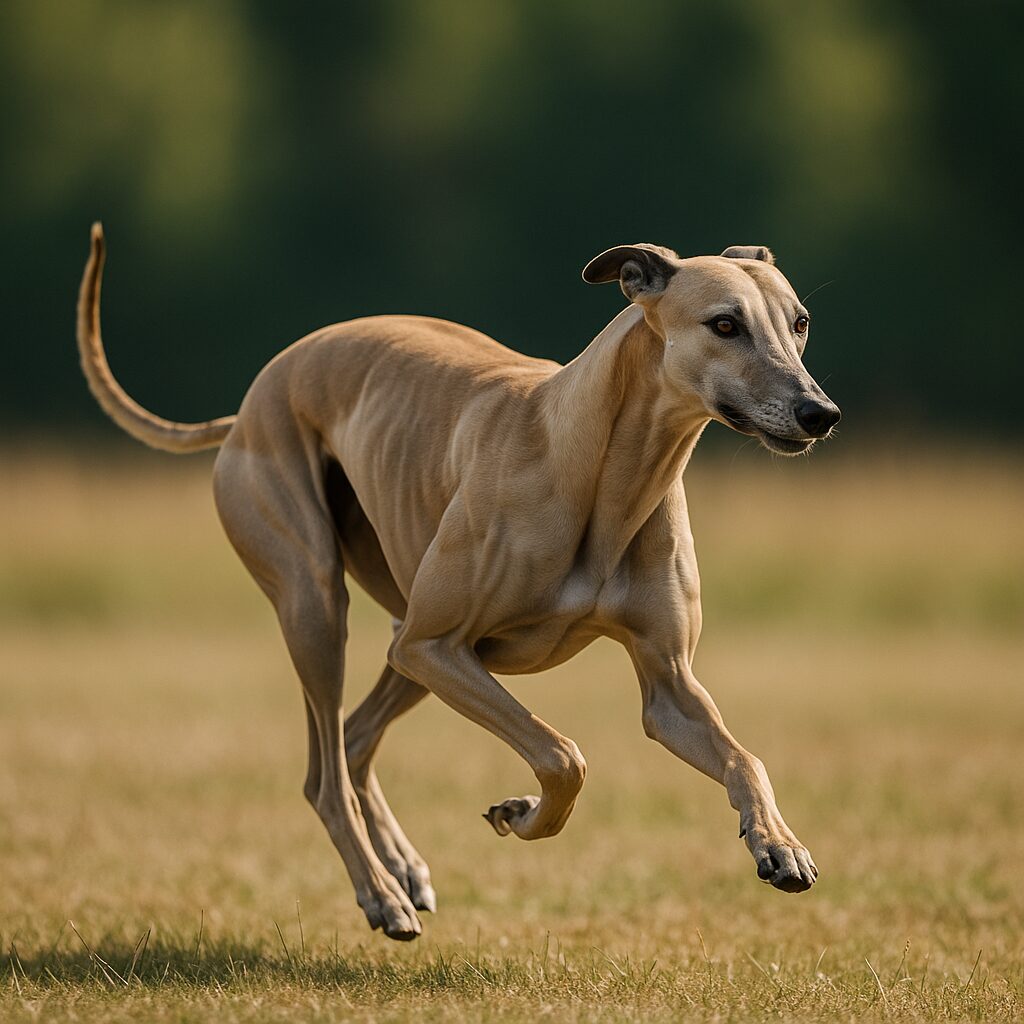
| 💨 | Top speed reaching 72 km/h thanks to a slender musculature. |
| 🧘♂️ | Temperament calm and reserved, almost contemplative daily. |
| ⚙️ | Regular exercise essential, in sprints or controlled walks. |
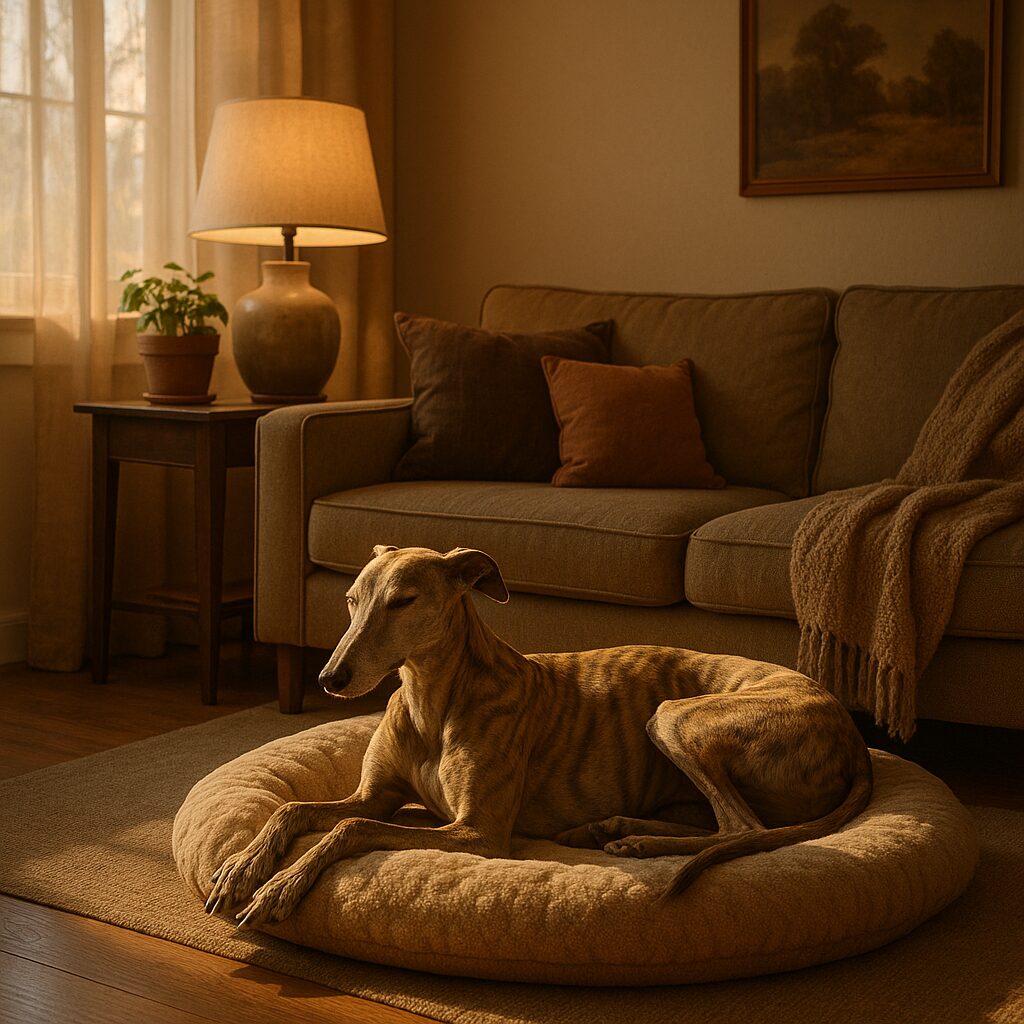
| 🏡 | Arrangement of a cozy nest and quiet resting areas. |
| 👪 | Gentle companionship, compatible with children and seniors. |

The Greyhound is often associated with the excitement of racetracks, but in reality, this sighthound proves to be a surprisingly peaceful companion off the track. Between its lightning-fast accelerations and long naps where every breath seems measured, the Greyhound combines two facets that, at first glance, seem opposed. To understand this paradox – aristocratic sprinter on one side, zen calm enthusiast on the other – one must delve into its history, decipher its extraordinary morphology, and create an environment adapted to its very unique needs.
Origins and history of the breed
Egyptian and Greco-Roman roots
The earliest representations of sighthounds resembling the Greyhound date back to the Egypt of the pharaohs. On bas-reliefs, one can already see this slender body ready to leap. Passed down to Greek and Roman civilizations, this grayish ancestor was prized for hare hunting, as its scent and speed made it a formidable partner. Unlike other canine lineages, the Greyhound lineage has remained almost unchanged thanks to natural selection and the maintenance of rigorous standards by aristocratic breeders in Europe.
From hunting grounds to racetracks
In the 19th century, hunting was supplanted by official races, popularized in Great Britain. Quickly, breeding focus shifted towards optimizing speed and endurance on the track. These efforts preserved the slender silhouette while refining the musculature. Today, despite the fame of racing Greyhounds, more and more former champions join adopting homes, opening the way to a second life far from stadiums and starting ropes.
Morphology and athletic performance

The Greyhound’s body illustrates a marriage of lightness and power. Every muscle, optimally positioned, contributes to propulsion. The skeleton, fine and solid, limits excess weight. The spine, very flexible thanks to more mobile vertebrae, acts as a spring capable of compressing and expanding the torso during the run.
A natural aerodynamic design
By compiling several canine anatomy studies, it is understood that the deep chest houses a large heart, ensuring efficient blood circulation. The generous lungs provide optimal gas exchange. With this entire setup, the Greyhound can surpass 70 km/h over short distances, rivaling some compact sports cars!
Comparison with Other Sprinters
Unlike a Whippet, which is lighter, or a Dalmatian, which is less streamlined, the Greyhound focuses its energy in intense bursts. Where other breeds maintain a steady pace, it favors an explosive effort, requiring a proportional recovery time. That is why its outings often involve intervals: sprint phases followed by peaceful walks.
Character and Temperament: The Calm Aristocrat
Some think speed equates to restlessness. Wrong: the Greyhound adopts a rather subdued behavior as soon as it leaves the racing track. You will see it spend hours observing the outside from a window, almost meditative. It does not demand constant stimuli, making it a dog appreciated by those seeking a quiet presence.
- Reserved with strangers, it prefers to observe before interacting.
- Attached to its home, it knows how to remain discreet in common rooms.
- Patient with children, provided they respect its space.
- Sociable with other dogs, as long as they share its gentle pace.
The secret to a happy Greyhound? A fine balance between controlled sprint opportunities and moments of tranquility where every muscle fiber relaxes.
The Needs of the Greyhound: Exercise and Rest
Obviously, the owner must combine two contradictory aspects: provide a secure space for its energy bursts and arrange a haven of peace where it can retreat. A simple walk is not always enough; it is better to organize free running sessions, ideally in a well-fenced enclosure.
| Time | Activity | Approximate Duration |
|---|---|---|
| Morning | Leisurely walk | 20–30 minutes |
| Midday | Sprint in enclosure | 5–10 minutes |
| Afternoon | Gentle play (tug, fetch) | 15–20 minutes |
| Evening | Leisurely stroll | 20–30 minutes |
| Night | Complete rest | 8–10 hours |
Nutrition and Hydration
After exertion, the Greyhound needs a diet rich in proteins and essential fatty acids to repair its muscles. Avoid low-quality “budget” kibbles that do not meet the needs of such musculature. Water must always be within nose’s reach to compensate for water loss linked to intense activity.
Living at the Greyhound’s Zen Pace
Arranging its interior means offering a niche where it feels protected. Layer several soft cushions, choose a non-slip floor covering, and install a wall section free of objects that could fall. Outdoors, the fence must be at least 1.20 m high to prevent any temptation to escape during an overly enthusiastic burst.
Gentle Stimulations
- Plush or soft rubber toys to engage the jaw without aggression.
- Mini agility courses, without jumps too high or slippery obstacles.
- Cuddle moments in calm, at the end of the day, to strengthen the bond.
Socialization and Mental Well-being
A regular visit to a dog park, without aiming for performance, is enough to maintain social balance. There, you will meet peers with whom to share light runs, without the pressure of ranking. This way, unnecessary stress is avoided and relational ease is cultivated, complementing an already calm temperament.
FAQ
- What is a Greyhound?
A slender sighthound, known for its bursts of speed and calm nature in daily life. - What is the maximum speed of a Greyhound?
It can reach up to 72 km/h, thanks to musculature specialized in sprinting. - Is the Greyhound suitable for apartment living?
Yes, provided it is offered moments of controlled running and a comfortable resting space. - How to properly feed a Greyhound?
Choose a diet rich in quality proteins, supplemented with omega-3, and ensure constant hydration. - What are the signs of a stressed Greyhound?
Excessive chewing, rare but intense barking, or refusal to eat are indicators to watch for.